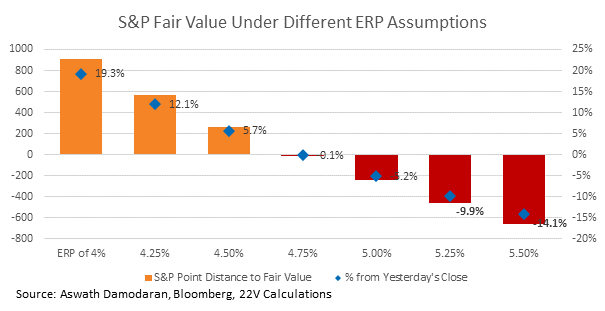
SUMMARY: Yields are restrained by COVID, inflation uncertainty and economic policy. Treasury volatility is elevated and likely to remain so as investors debate the outlook, particularly for inflation. Just About everyone we talked to in during our London trip this week expected macro volatility to be high, now with the COVID lockdown wave in Europe, implied macro volatility is increasing rapidly. At the same time, the S&P has moved closer to fair value. But fair value doesn’t turn negative under the current ERP unless the 10yr yields hit 3%. Upside increases if expected cash return improvs (why rising dividend and buyback sentiment is important) and the ERP moves lower. The ERP was unusually high during the post-GFC regime. Now that we are exiting a long period of low inflation and slow growth, a normalization of the ERP seems reasonable.

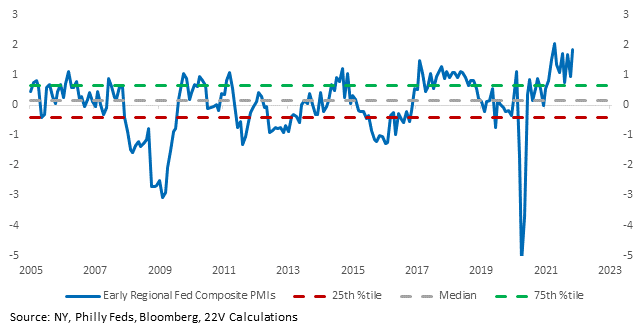
The Philly Fed Regional PMI beat expectations resoundingly yesterday, following the path of the Empire survey. Aggregation of early regional Fed PMIs shows overall activity remains robust. Demand and leading indicators are still strong, supporting longer-term equity performance despite poor sentiment and overall uncertainty. With US demand firm, supply chains improving and COVID uncertainty high, retail names (XRT) and homebuilders (ITB) will continue to benefit.
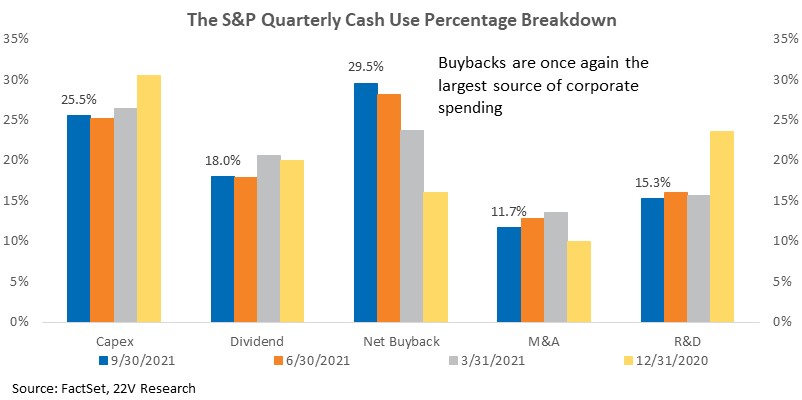
As we wrote in a quant report yesterday, stronger than expected earnings growth in 3Q supported a large increase in S&P total cash use. Capex rose 18% as companies invested to meet booming consumer demand, and net buybacks reached a new all-time high. Surging cash returns are another important tailwind. Capex rebounding is a support for the economic cycle and organic growth while buybacks help reduce share counts, increasing inorganic growth.
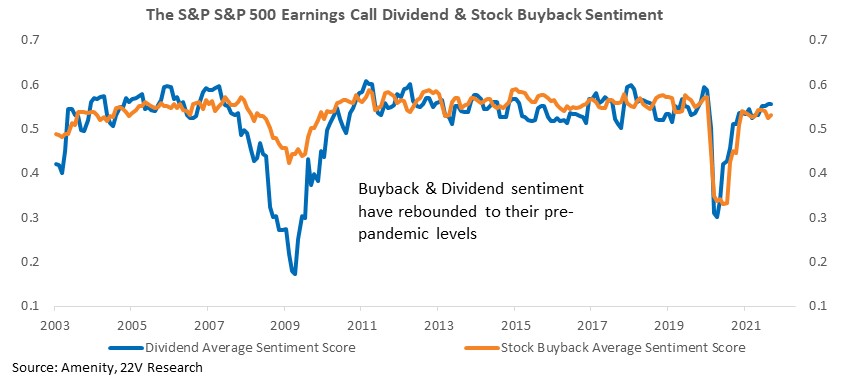
Management sentiment toward cash return, including dividends and buybacks, also improved. Net sentiment toward cash return categories, measured using the Amenity natural language processing tool, is near its pre-pandemic level. Expect cash return to remain a large proportion of corporate spending over the coming quarters, boosting large-cap earnings and returns.
Full report below…
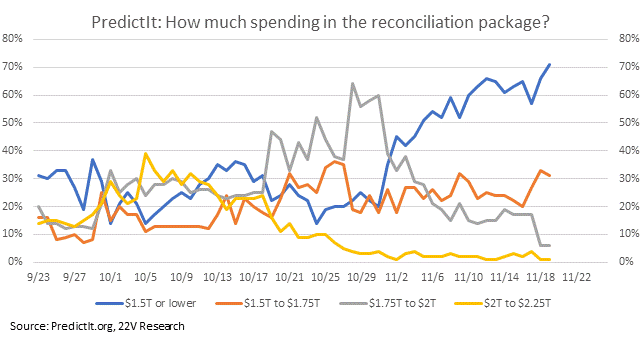
MARKET VIEWS: The CBO estimates Biden’s $1.64 trillion bill will add $367 billion to the deficit over 10 years, rather than it paying for itself. Kim Wallace, 22V’s head of Washington policy research, does not think the CBO’s estimate changes the odds the bill is passed or the timing. Per Kim, “the House vote is scheduled to begin at 8am on a nearly $1.7 trillion ten-year spending plan. Pelosi wouldn’t do that if she didn’t have the votes. The Senate process ramps up next week where several changes to the bill are likely, both in scope and substance. House floor action added back paid family leave which is opposed by at least one senator. We believe the president will receive a bill late next month in the $1.5-1.7 range.” That’s likely higher than consensus; PredictIt betting odds has $1.5T or lower at 71%.
The Philly Fed Regional PMI beat expectations resoundingly yesterday, following the Empire survey. The KC Fed PMI missed. An aggregation of the early regional Fed PMIs shows overall activity is robust. Capex intentions and new orders were particularly good. Demand and leading indicators are still strong, supporting longer-term equity performance despite poor sentiment and overall uncertainty.
Surging cash returns are another important tailwind. Capex rebounding is a support for the economic cycle and organic growth while buybacks help reduce share counts, increasing inorganic growth. As we wrote in a quant report yesterday, stronger than expected earnings growth in 3Q supported a 5% sequential and 54% y/y increase in S&P total cash use. Total spending by S&P companies reached $751bil. Capex rose 18% as companies invested to meet booming consumer demand, and net buybacks reached a new all-time high.
Management mentions of cash return, including dividends and buybacks, has also improved quickly. Net sentiment toward cash return categories, measured using the Amenity natural language processing tool, is back near its pre-pandemic level. Expect cash return to remain a large proportion of corporate spending over the coming quarters, boosting large-cap earnings and returns.
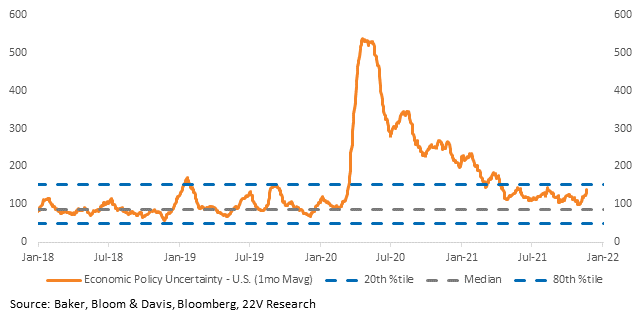
Yields are restrained by uncertainty in inflation and economic policy. Treasury volatility is elevated and likely to remain so as investors debate the outlook, particularly for inflation.
There is limited downside risk and good upside as headwinds ease and the equity risk premium moves lower. The S&P has moved closer to fair value, but still has upside at the current ERP until 10yr yields hit 3%. Restrained yields help fair value estimates.
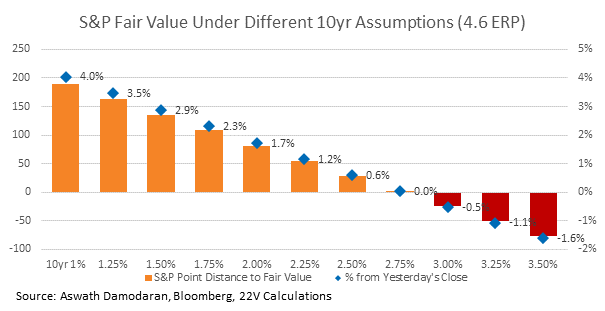
Upside increases as the ERP moves lower, which we expect. The ERP was unusually high during the post-GFC regime. Now that we are exiting a long period of low inflation and slow growth, a normalization of the ERP seems reasonable.