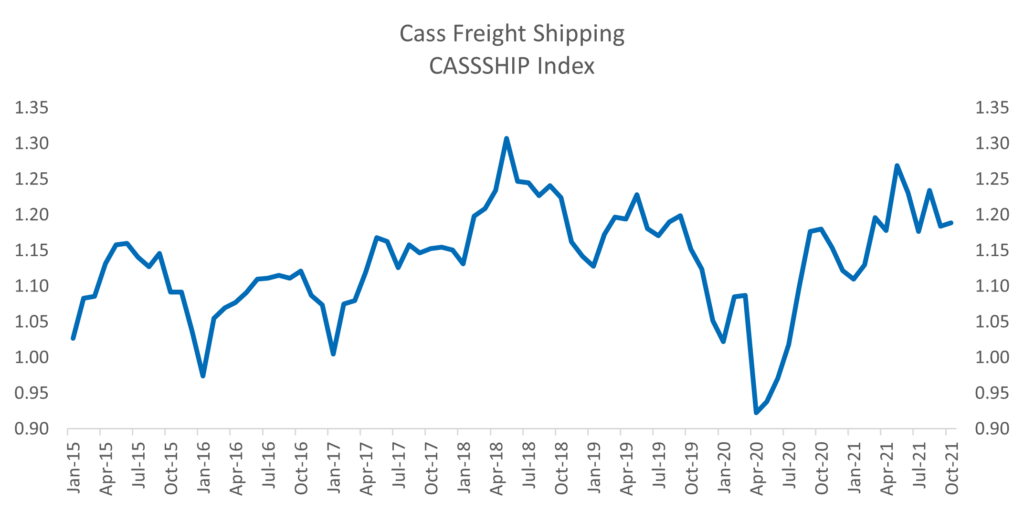
Sixty Minutes on Sunday night explored the causes of America’s supply chain crisis. It’s a useful report on several factors that influence the supply side of the inflation question. We found most interesting how well CBS identified and explained the role of each link in the global value chain. Shippers, port operators, workers (both unionized and not), truckers (mainly non-unionized), cargo handlers, ship crews, data operators, and port pilots all contribute to a vexing knot in which everyone and no one is responsible.
Stepping away from the excellent journalism, we make several observations about the central question of what is causing the global value chain crisis. Beginning with that this is not a US problem in cause or effect. Additionally, worldwide supply chains management has lagged other globalization efforts by decades. Again, the pandemic revealed the potential downside of operating a complex system on tight margins and misplaced trust. All it took was a worldwide shock to expose vulnerabilities few people ever contemplated, and that public and private policy makers had not yet been forced to address.
Americans are upset. “Inflation” read at 100 at the end of last week, up from a 55 reading the week before. Is that economics or megaphones at work? “Stagflation” was left by the lexiconic roadway in mid-October at the same 100 loft. We tolerate dysfunction until it comes home to roost – and stays. Fairly or not, we increasingly express our disdain through political megaphones happily amplified by social media targeting politicians, especially presidents and particularly those of a different tribe than our own. Our 22V strategy and quant colleagues were kind to share a political breakout of University of Michigan consumer confidence. Sometimes pictures are all one needs.
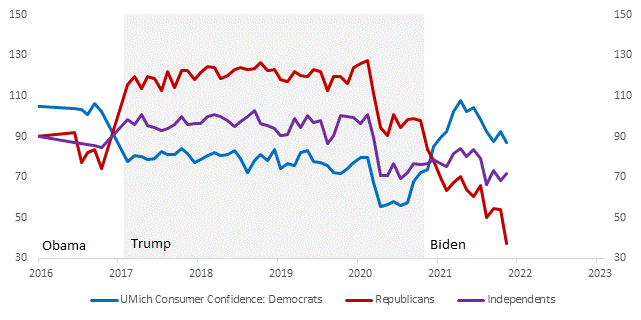
Even as policymakers squabble about words to describe their inflation expectations, there might be a glimmer of hope for the Biden administration in the purple and blue tails nudging closer together. Democrats remain stalwarts for Biden and Independents seem slightly open to giving him a break. That the blue/red factions passed each other in a position swap after the election speaks to the reality of political tribal polarization, which is worrisome but not for global value chain motivations.
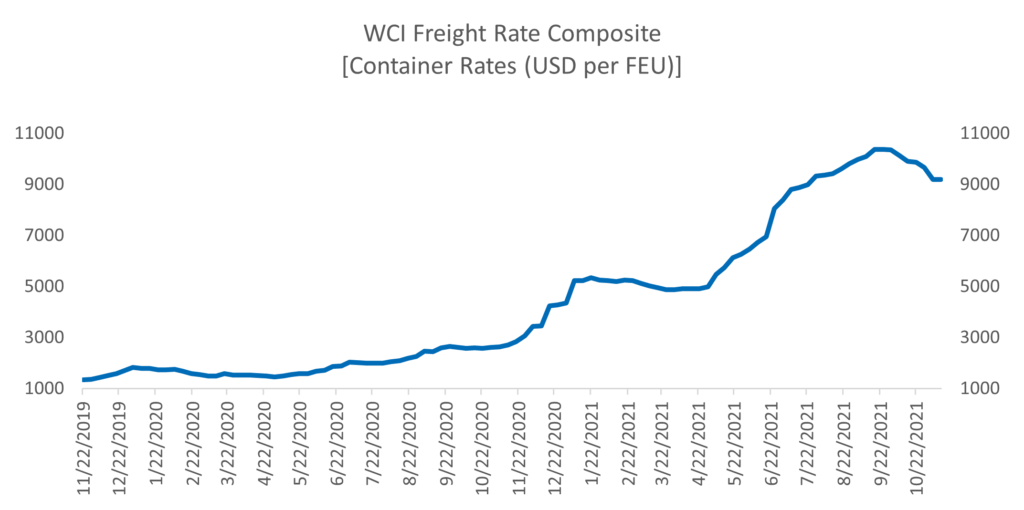
As the bickering continues over inflation expectations, ocean- and road-going freight rates peaked two months ago. Should this trend continue not only might Powell Inc. be vindicated but the 2H22 supply glut being whispered by some (including our colleague Dennis Debusschere) could materialize.
We’ve previously mentioned the Federal Trade Commission’s meeting Thursday at which chair Lina Khan likely will command a 3-2 vote to require that large retailers and their suppliers send to the Commission information about supply chains. Far from an academic exercise, the majority on the Commission and staff will search data provided to discern whether anticompetitive practices are adding to inflation. For the record, the Federal Maritime Commission has been analyzing the issue since 1Q20.
The infrastructure bill signed into law yesterday includes $17 billion specifically for ports and $55 billion for waterways. China has four fully automated ports (from berth to container stack), Australia has three, and the US only two. Analysts and practitioners suggest now would be a good time to bring blockchain technology to shipping. More port operations might be positioned to take advantage of a crisis rather than letting another one go to waste.