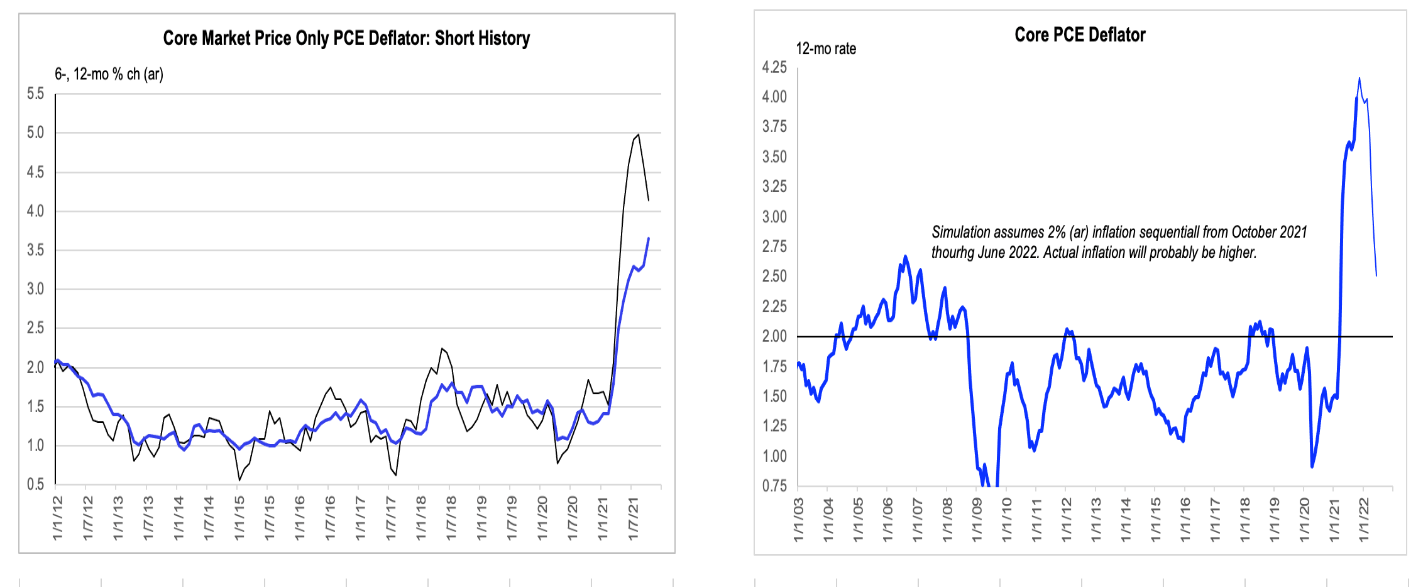
SUMMARY: Inflation uncertainty is likely to remain high as owner’s equivalent rent and the tight labor market will support inflation into next year. That being said, with supply chains appearing to improve (See Toyota increasing production news) and much of recent price increases being concentrated in goods, which are being affected by supply-chain issues, inflationary pressures should ease. As 22V economist Gerard MacDonnell points out, if we assume 2% sequential inflation from October ‘21 to June ‘22 (a fair assumption given comps), the core PCE deflator would move steadily lower, which the Fed would be comfortable with (i.e., the rate path doesn’t have to move higher from here). That helps explain why 10yr yields have been anchored (the other reason is China).
The risk to the above assumptions is that labor market dynamics could move inflation above the estimated trend. Which is why inflation uncertainty is likely to remain high until investors get a better handle on how quickly the urate could drop and wages accelerate. Participation is the major swing factor.
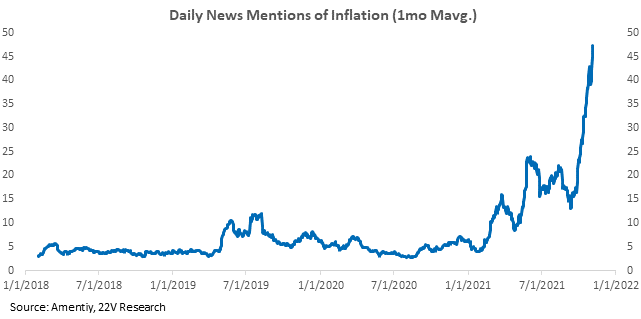
We are tracking daily news mentions of inflation, which have skyrocketed, and inflation sentiment readings are near their lows. If the easing supply constraints helps improve inflation sentiment (less bad), companies that have been most impacted by supply chain problems will outperform. We have a basket of those stocks, which have outperformed recently, and Retail in particular would benefit.
Although near term Fed rate hike expectations moved higher following the stronger than expected CPI report, 2023, 2024 and 2025 rate hike expectations have been relatively steady. That indicates 1) investors expect inflation pressures to ease over time (supply constraints ease) and 2) suggests extremely low real rates, helping explain why financial conditions have remained easy despite short rates increasing. This dynamic also explains why Tech remains bid. Real implied yields declined again last week.
Anecdotally, there are more articles questioning the competence of China’s current policy decisions (see here and here) and unintended consequences of bureaucrats struggling to understand how to please Beijing. 10yr yields are biased higher over time, but the China overhang is a continued anchor near term. China’s state grid says power supply is back to normal, which means factories will remain open. Fuel shortages for both China and India have eased. So, the supply side is better. Bottom line is China’s credit impulse needs to turn up before global yields start to move higher. Just about everyone expects weak China data this week.
The demand outlook is VERY STRONG, which is why markets are biased higher, but that same demand will keep inflation and market volatility elevated. Focus on internals and companies that benefit from strong demand and improving supply chains. The risk to the S&P is not just 10yr yields. While financial conditions remain easy and corporate cash return elevated, downside risk to equities from a backup in yields is limited. Sudden shifts like we saw last week could push asset prices lower short term, but the medium-term outlook remains positive unless yields move MUCH higher. We are more focused on the intent of the Fed and if those intentions become tightening financial conditions in an effort to slow inflation, the market outlook will be less attractive.
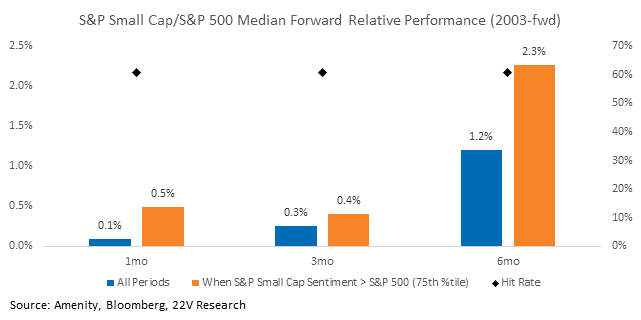
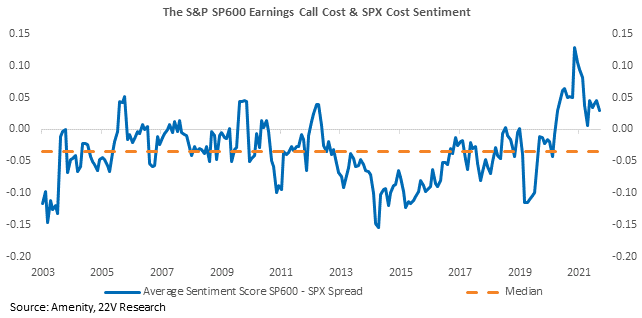
Small cap earnings sentiment is in its 75th %tile relative to large cap. When that has been the case in the past, small caps have significantly outperformed large caps over a 1/3/6 month basis. Small caps benefit from elevated inflation expectations and management sentiment toward costs is strong relative to large caps.
The short version…developed world growth is strong. China is a risk. That keeps real rates pinned and biases the S&P higher. But inflation uncertainty and the Fed being data dependent, creates volatility along the way.
Full report below…
Inflation Vol: The headlines on inflation remain an overhang for 10ry yields. Bottom line. And that will continue to impact confidence readings. A sharp increase in confidence is not likely with daily news mentions of inflation skyrocketing…
…and inflation sentiment readings are still near their cycle low. Inflation sentiment readings bottoming would boost confidence.

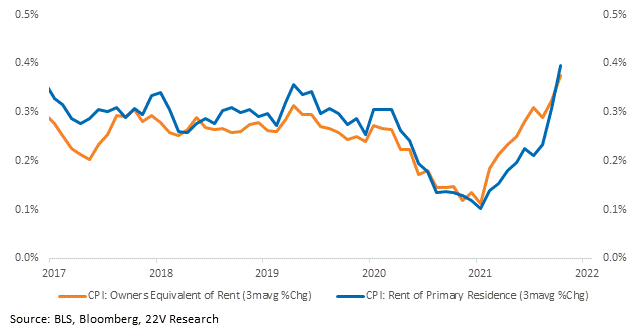
Gerard MacDonell, 22V’s economist, wrote “The inflation data remain difficult to read, because much of the price advance is still concentrated in goods that are being affected by supply-chain issues, which are temporary in terms of their effect on the rate of change and possibly reversible even in level terms.” BUT “The aggravating influence of higher rents inflation is going to persist, perhaps for as long as a year. And it is going to strain credulity to start stripping out rents on the grounds that the measured inflation rate there is surging.”
One of the reasons Fed futures are not pricing in an aggressive rate hike cycle (on a multi-year basis) has to do with something Gerard has pointed out. His lower right chart below shows what the core PCE deflator would look like if we assume 2% sequential inflation from October 21 to June 22. That path of inflation is reasonable from here given base effects. Futures pricing suggests inflation will roughly follow the path of Core PCE next year and the Fed will look through the base effects. i.e., not an aggressive pace of tightening. The issue with that assumption, as Gerard points out, is that labor market dynamics could easily move inflation away from the estimated trend. Which is why inflation uncertainty is likely to remain high for a while.
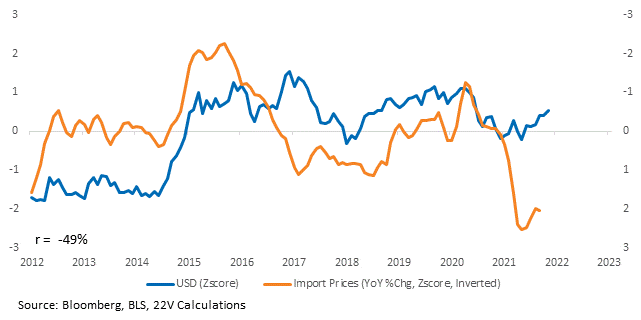
The USD continues to break out and a stronger USD, which seems likely given the disconnect between US and ECB policy and relatively strong US economic growth, should alleviate some import price headwinds. Point being, the strong the USD gets, the lower the stagflation worries should be. As we think about input prices going forward, we should assume downside risk.
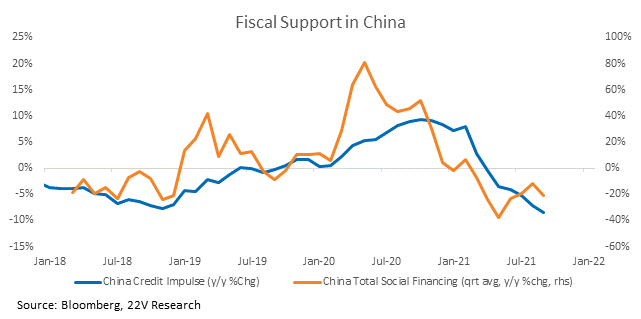
China Overhang: There are more articles questioning the competence of China’s current policy decisions (see here and here) and unintended consequences of bureaucrats struggling to understand how to please Beijing. 10yr yields are biased higher over time, but the China overhang is a continued anchor on 10yr yields. China’s state grid says power supply is back to normal, which means factories will remain open. Fuel shortages for both China and India have eased. China’s credit impulse needs to turn before global yields start to move higher.
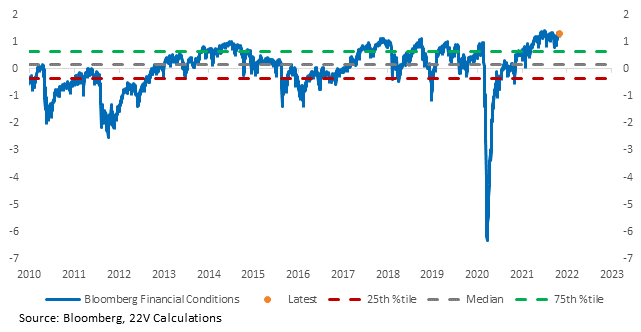
The Fed is transitioning from stimulative to flexible policy and is comfortable with risk assets reflecting that shift, but that does NOT mean monetary policy is restrictive or will be restrictive any time soon. The Fed emphasized data is becoming increasingly important, but central bank policy is not going to be an issue for markets for now. That helps keep real rates pinned and supports tech.
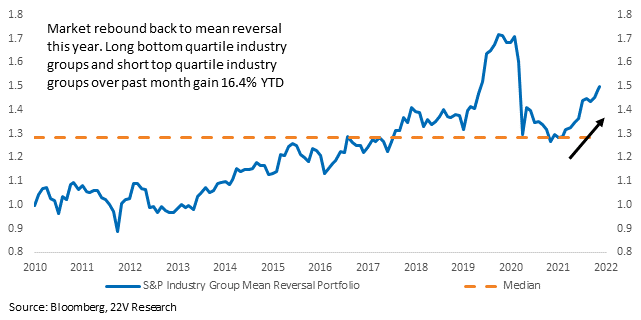
Month to month reversals have been common in 2021 leaving our Industry Group Mean Reversal portfolio up 16.4% YTD. This will continue while inflation uncertainty remains high, making it tough to benefit from longer term industry group trends.
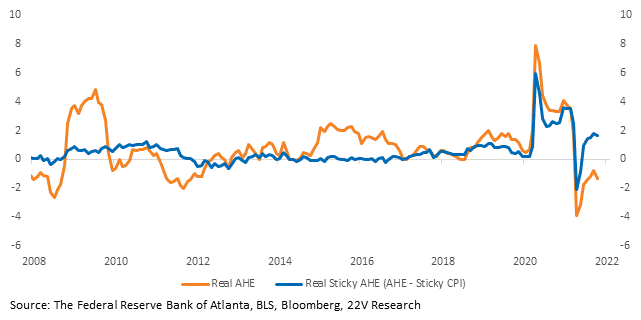
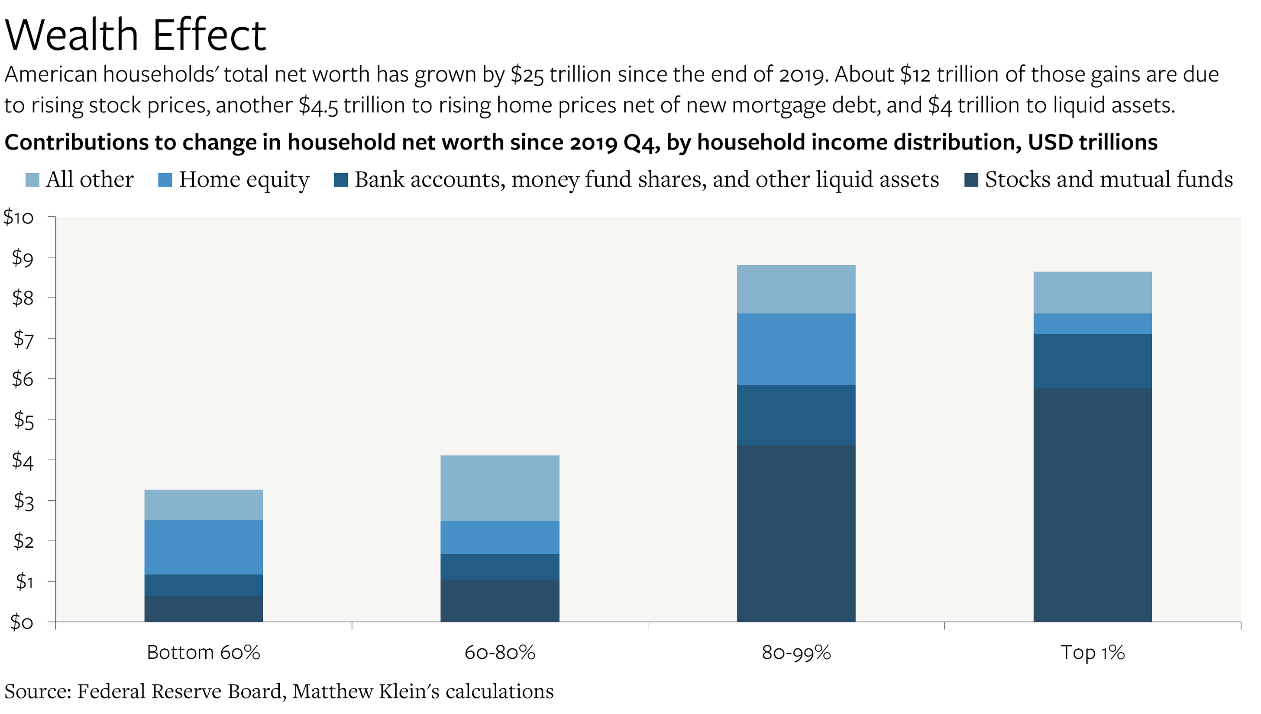
Demand Growth Is Strong: Demand growth (particularly consumption growth) remains strong. Don’t get caught up in the negative real wage fear. As we pointed out last week, Real Sticky AHE, constructed using the Atlanta Fed’s Sticky-Price CPI, remains well in positive territory. Sticky inflation is 72% of CPI, so we feel comfortable making this adjustment. Headline CPI will come down next year and wages will remain biased higher. Real average hourly earnings will increase. Plus, the massive wealth effect, across income levels (see chart below), supports growth.
The chart below is courtesy of Mathew Klein’s Substack. As Matt notes, While the bulk of household wealth gains “have gone to the people who had the most to start with, people lower down the income distribution are also a lot better off than they were before.”
| 
|
|
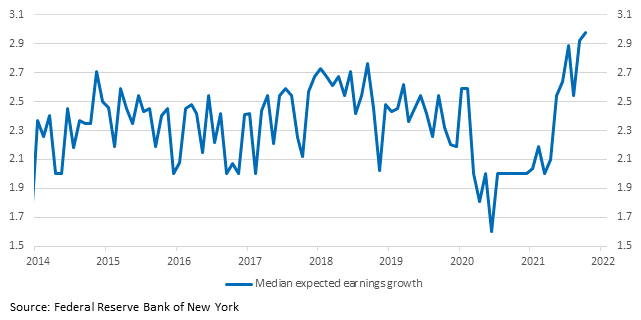
The New York Fed consumer survey came out last week and although the short term inflation expectations readings (1 and 3 years) remained at unusually high levels, inflation concerns are not impacting spending and income expectations. Median earnings growth moved to a new record high…
Household income growth continues to accelerate to the upside. This reading fits with the unprecedented household wealth accumulation and positive flow of savings we have harped on.
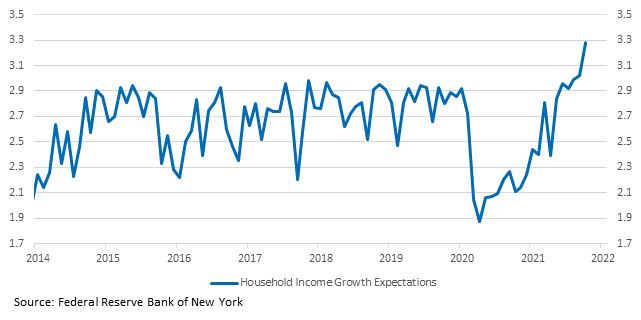
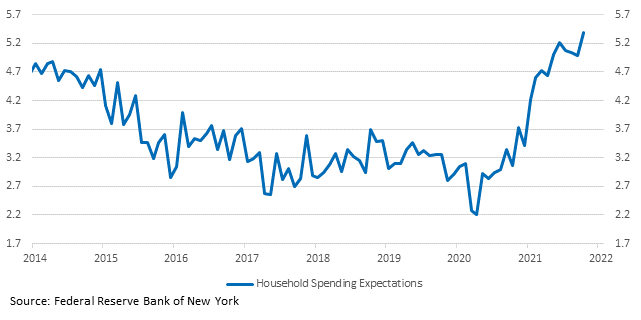
Household spending expectations moved to a new high as well. Inflation is not causing demand destruction.
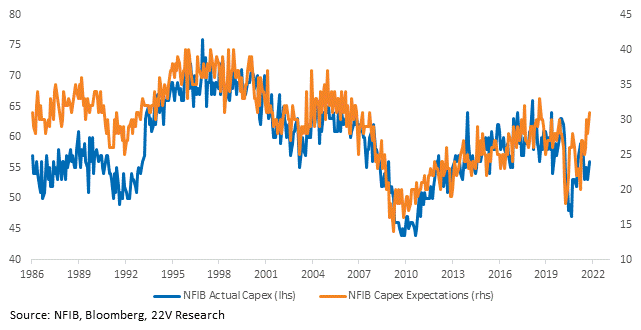
Capex Expectations Elevated: internals of the NFIB on Capex (improved again) and hiring plans consistent with strong demand growth and the New York Fed consumer survey showing record levels of household earnings, income and spending growth and why sentiment is not bullish RELATIVE to hard data.
Own Companies That Benefit from Improving Supply Chains: Given our view of a strong demand backdrop and improving supply chains, we continue to favor companies that have been most negatively impacted by supply disruption. The 22V Quant basket of stocks with the most negative supply chain sentiment has meaningfully outperformed over the past few weeks.
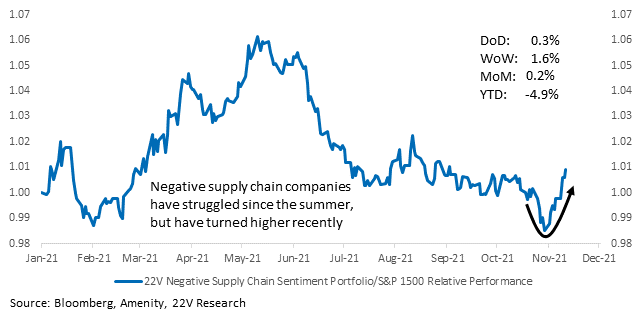 Companies in the basket.
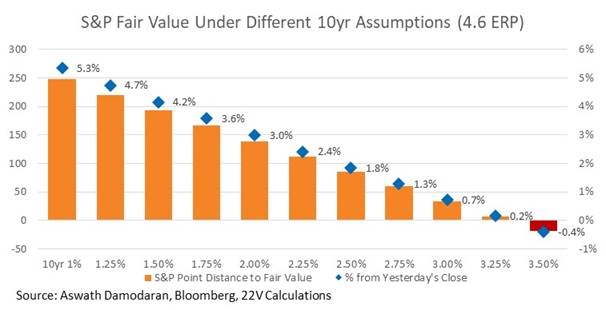
Bond Yields & Market Returns: There is a plausible argument for yields moving toward 2.5% (normalization of inflation/rate hike expectations + rebound in the term premium as economic uncertainty declines). A greater than 2.5% yield is hard to arrive at without an inflationary spiral (negative for risk and real growth) or a material increase in economic activity that pushes the term premium and r* higher (good for growth, mixed for risk assets). While financial conditions remain easy and corporate cash return elevated, downside risk to equities from a backup in yields is limited. Sudden shifts like we saw yesterday would push asset prices lower short term, but the medium-term outlook remains positive unless yields move MUCH higher.
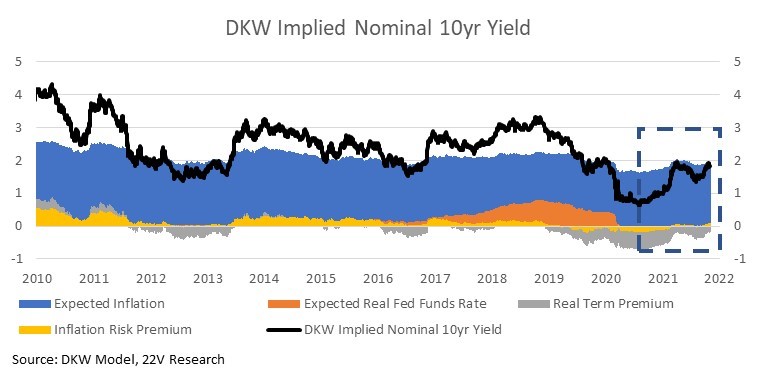
YIELDS ARE ABOUT UNCERTAINTY: The path towards a higher level of yields is through a backup in expected inflation, an increase in the real term premium, and in the further upward adjustments to the real fed funds rate (increase in r*). Those forces are tied together. Fed rate hikes are still expected to be on hold, likely until the back half of 2022. Signs productivity is failing or that participation is weakening would put upward pressure on rate hike expectations and inflation.
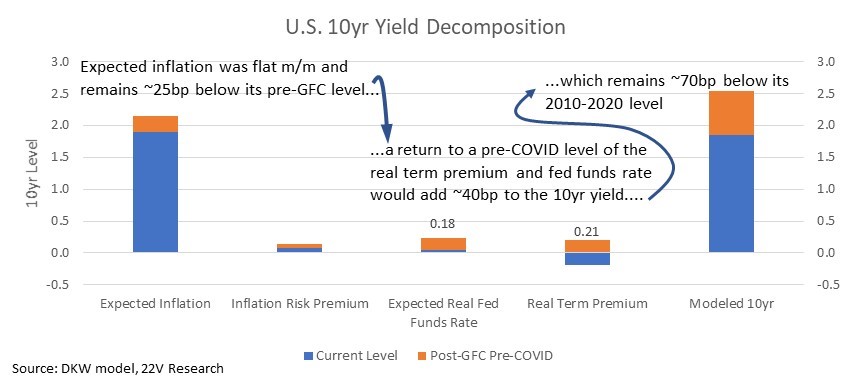
Through the end of October, implied expected inflation moved modestly lower (-3bp) while the term premium and inflation uncertainty added 8bp to yields. If investors changed their inflation outlook, there is further room for upward pressure on bond yields
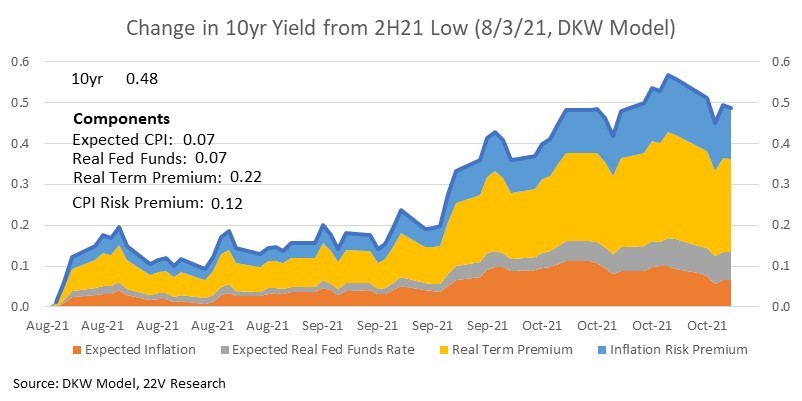
From the 10yr low in early August, uncertainty (term and inflation) has been responsible for most of the increase in yields. Expected inflation and funds rate are responsible for the rest. Easing of supply chain pressures would help reduce inflation uncertainty and expectations. That does not put downward pressure on yields but does suggest less of an upward bias over time.
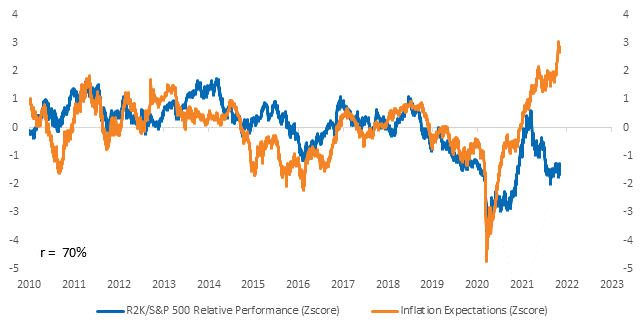
Small Cap Supports: Small caps have a lot of room to catch up to inflation expectations though. Part of the reason for the gap is that supply side concerns have driven inflation uncertainty and pressure. Supply constraints lead to fear of demand destroying inflation, which is a significant headwind for small caps. As supply chain pressures ease and demand remains firm, we expect small caps to catch up some of the relative performance to inflation expectations.
Small cap earnings sentiment is in the 75th %tile relative to large cap earnings sentiment.
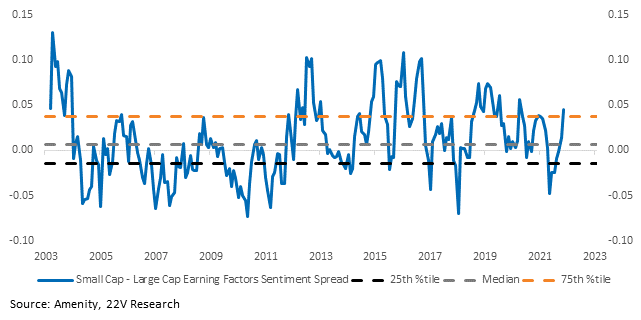
Small cap forward performance is usually better than normal when the spread is this wide. So the improvement in small cap earnings sentiment is relevant.
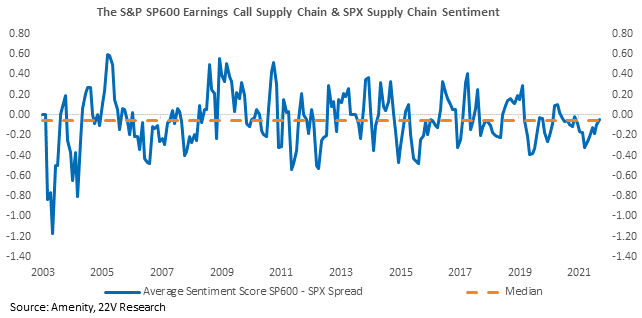
Looking at earnings calls internals, small cap supply chain sentiment has improved relative to large cap. We are not sure why, but our best guess is large caps have more direct exposure to supply chain issues.
And small cap earnings call cost sentiment is unusually high relative to large cap….
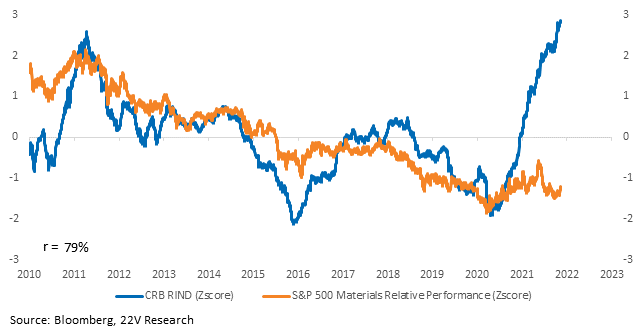
Long Materials: Something to keep in mind, if the global economy does not suffer from demand destruction or a sharp fed hiking cycle, that takes out commodity prices, Materials have significant upside relative to Commodity prices.