
Our entire repository of COVID charts is HERE.
Kim Wallace, 22V’s Washington Policy Analyst, wrote a report on vaccine mandates this morning (check it out HERE). Per Kim, the Biden administration is committed to its deadlines but is offering flexibility over enforcement (people won’t be fired immediately). Jeff Zients, the White House coronavirus response coordinator, reported the upcoming deadlines “are not cliffs.” Kim estimates enforcement for noncompliant employees will stretch into 1Q22. The flexibility alleviates concern over labor shortages, which would exacerbate supply chain strain, into the holiday season. The mandate will not create economic disruptions. The administration has maintained vaccine mandates will help people return to work. There will be legal challenges but so far vaccine mandates have been upheld (see the Supreme Court’s Friday denial of a religious exemption). Clearly the administration is considering the labor force and supply chains as it finalizes its rules, and that is a good thing for the economy.

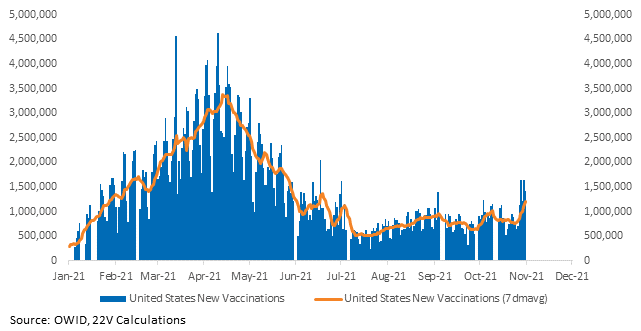
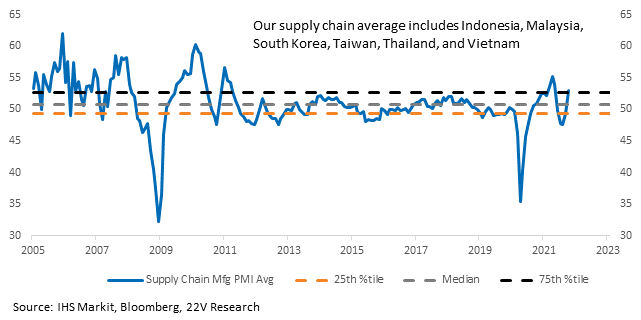
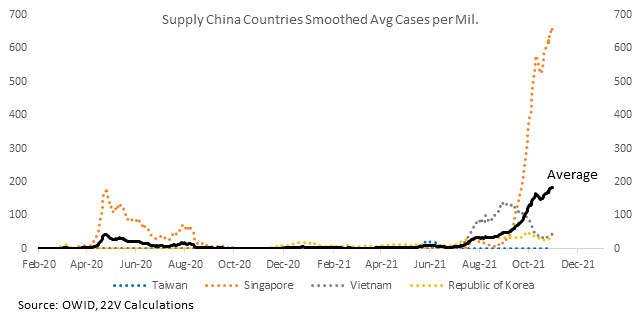
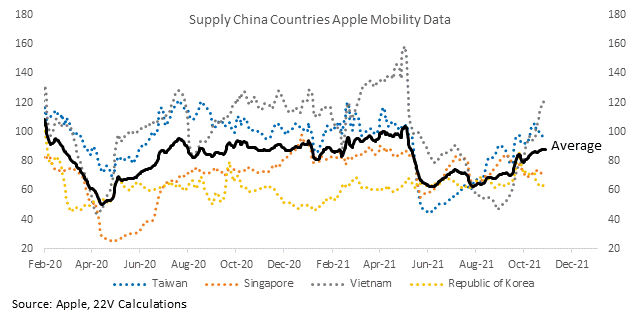
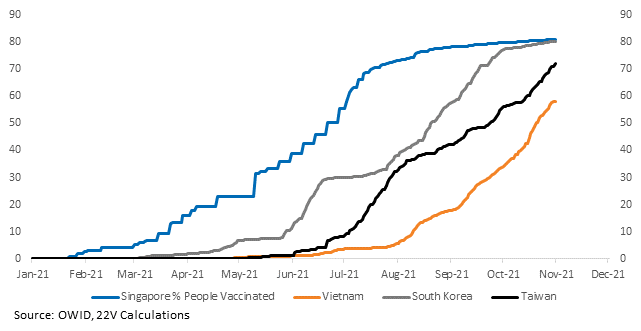
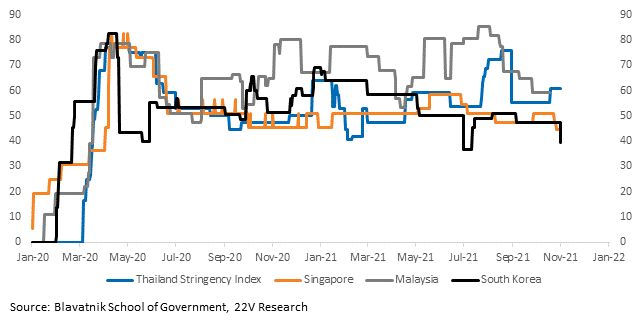
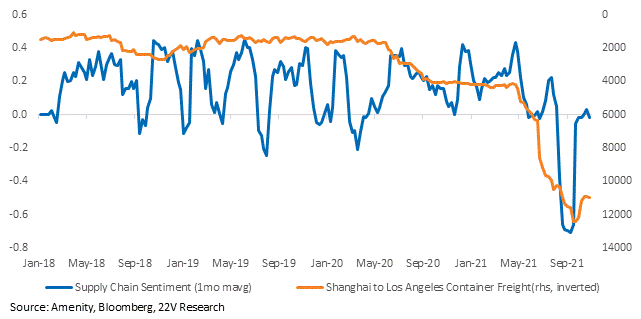
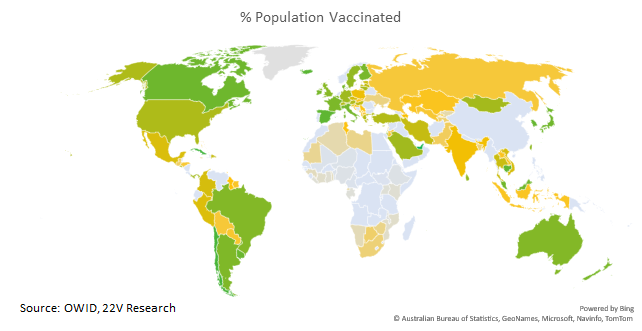
Speaking of supply chains, global PMIs are rolling out this week and supply chain country PMIs are up dramatically month over month. The reacceleration in activity comes alongside an improvement in COVID trends, mobility, vaccinations, government-imposed restrictions, and supply chain news sentiment. These are all good signs for improvement in supply chains. As we pointed out in our Quant report this morning, supply chain sentiment in 3Q earnings call transcripts has been negative, so signs that conditions are improving are important. Vaccinations are particularly helpful to maintaining activity if case growth increases again, as we have seen play out in the developed world. Vaccination rates are high across supply chain countries.
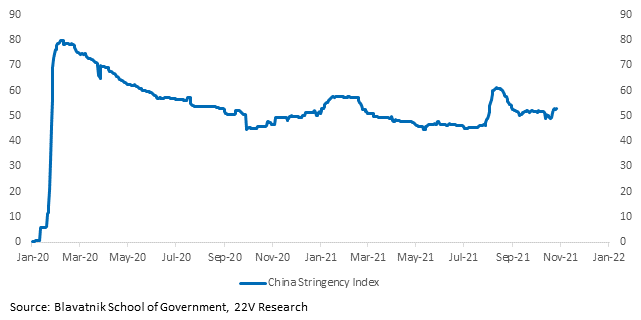
We saw a story making rounds about China shutting 34,000 people in Shanghai Disneyland after one person tested positive (everyone could leave after testing negative – the headlines are a little dramatic). COVID data in China is opaque and the countermeasures appear to be severe and disruptive. We are leaning on the stringency indices put together by the Blavatnik School of Government at Oxford to gauge how disruptive policy is. See HERE for more on the construction of the indices (they’re legit). China has become more stringent over the past couple of weeks, but not even as severe as in August of this year.
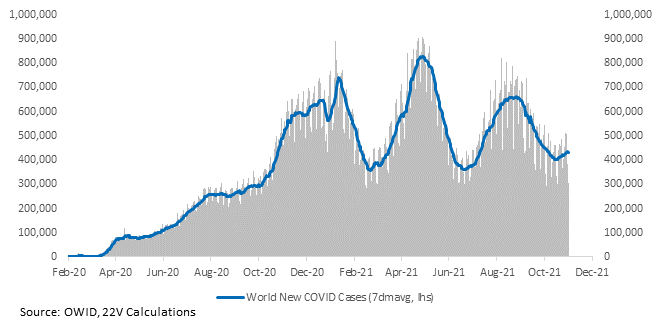
Case growth is still increasing globally, but is concentrated in Eastern Europe and Russia, which both have poor vaccination rates.
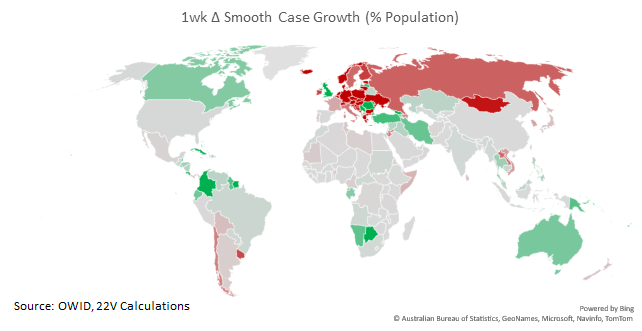
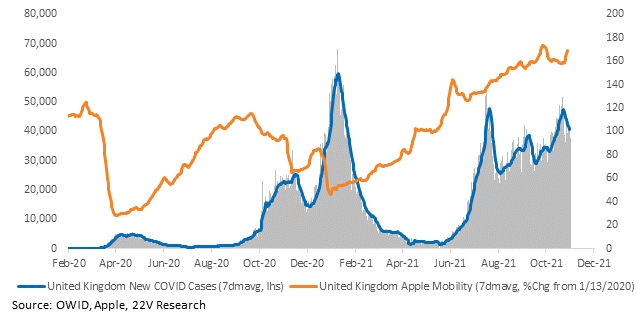
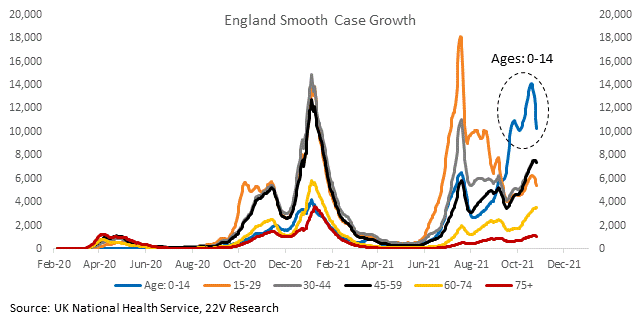
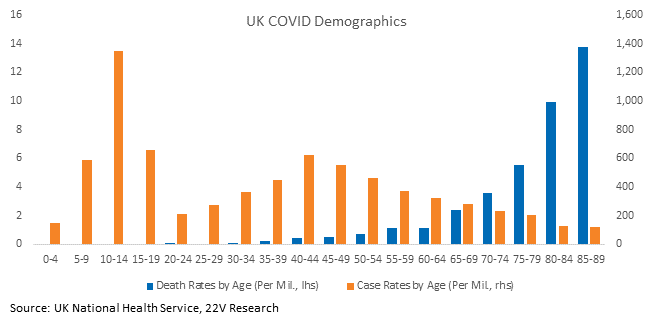
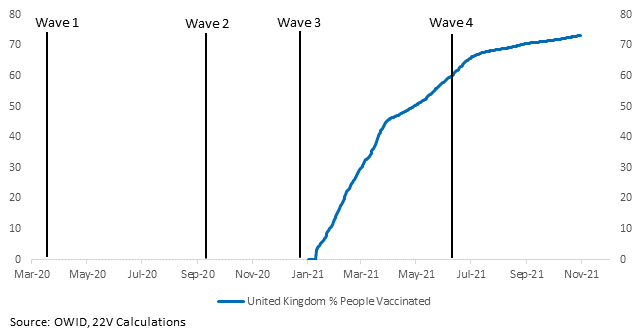
Encouragingly, case growth is receding in the UK. Cases stayed concentrated in younger cohorts, who are unvaccinated and for whom COVID is much less dangerous. The recent wave did not overwhelm vaccines. Severe cases stayed low while mobility remained robust.
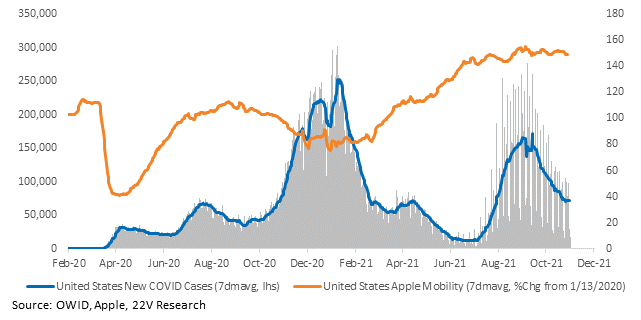
Case growth is stagnant at a (relatively) low level in the U.S. Nothing new to report here.
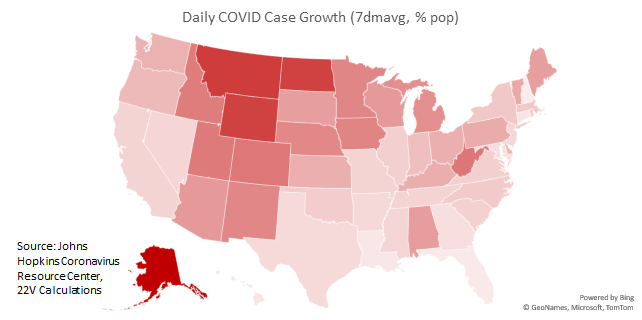
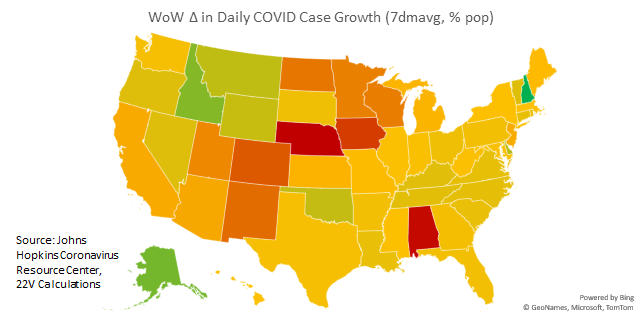
Charts for every state and country we have data for are HERE.

