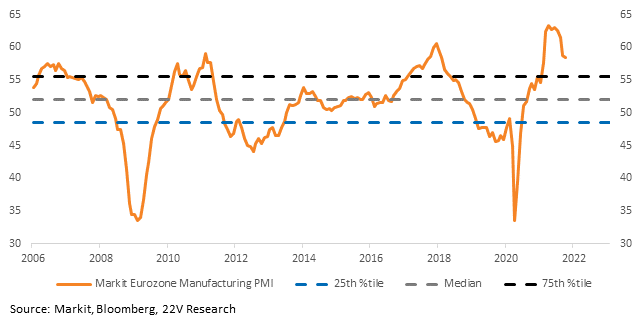
SUMMARY: Eurozone flash PMI data was better than expected (58.5 vs 57.1 est) and remains in its 93rd percentile historically. UK retail sales missed, but volumes remain +4.2% above pre COVID levels (strong) and Japan’s flash and manufacturing PMIs were better than expected. The services PMI in Europe was weaker than expected and shouldn’t be dismissed, but in aggregate the demand backdrop remains firmer than investors expected. Claims broke lower again yesterday and the Philly Fed internals were strong.
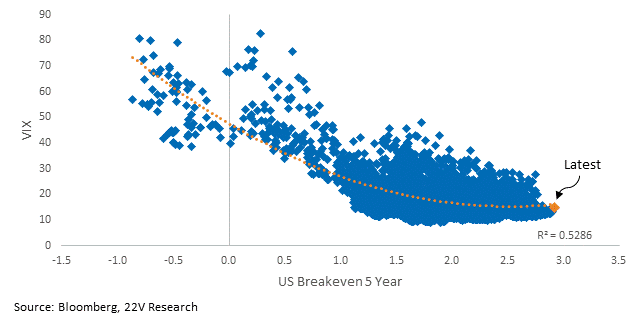
Despite headlines focused on lower m/m PMIs, UK retail sales missing and soaring inflation expectations, credit spreads have tightened and the VIX is at its lowest level since before the pandemic. Volatility is lower across the world. Inflation expectations and the VIX are negatively correlated. If today was truly a stagflationary or worrisome backdrop that relationship should reverse with inflation expectations going up = a HIGHER VIX lower. It is not happening.
So what is going on? 1) Trend economic growth in the US and around the world is stronger than expected 2) supply outlooks are improving 3) as a result of 1 and 2, inflation expectations are moving up for the right reasons (improved growth prospects), 4) the Fed is still pro-growth 5) earnings are strong, margins are higher (tracking 14% vs 13% expected) and assuming supply bottlenecks clear, likely to remain so. Lastly, 5) corporate tax hikes are becoming less likely.
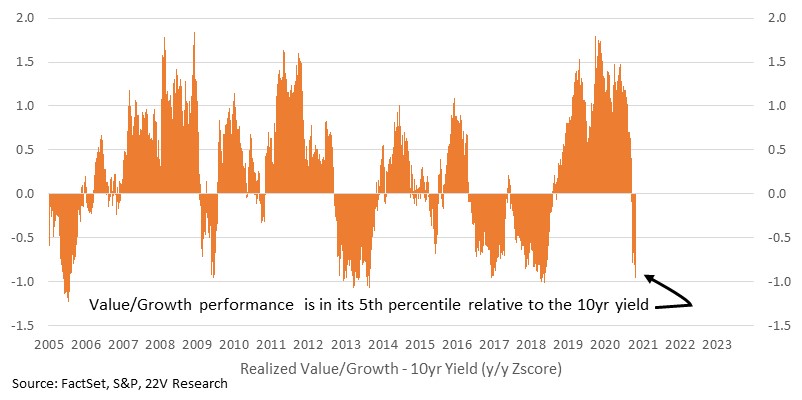
Cyclicals have led sector level internals and UST yields are near their 2021 highs. Firm economic activity and a pro-growth fed suggest continued upward pressure on yields. Currently, Value/Growth performance is in its 5th percentile relative to bond yields. With growth firm, earnings strong, seasonality a tailwind, and sentiment improving, a rebound in Value, particularly those levered to yields and the economic cycle, should be expected into year end. We will be more confident in this trade follwing Tech earnings.

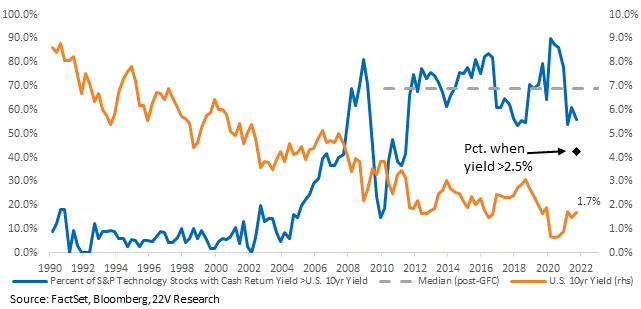
We also look at some of the “mechanics” that could drive UST yields above 2% and closer to 2.5% or above over time. This was a point of major discussion at the macro dinner we hosted. Side note, going from the current 10yr level to 2.5% overnight would be an issue for Tech. But 2.5% on 10yr yields doesn’t make Tech less attractive on a cash return basis. 50% of Tech stocks would have a cash return yield above 10yr yields if the 10yr moved to 2.5%. Big Cap tech would be fine.
Full report below.
MARKET VIEWS: If you read just the headlines, you would think the stagflation was getting more intense. Headlines are focus on the Eurozone PMI slowing MoM, soaring prices within the PMI readings, UK retail sales falling for a fifth month in a row and the surge in inflation expectations globally. What is being ignored? The Eurozone flash PMI was better than expected (58.5 vs 57.1 est) and remains in its 96th %tile historically. UK retail sales missed, but volumes remain +4.2% above pre COVID levels (strong) and Japan’s flash and manufacturing PMIs were better than expected. The services PMI in Europe was weaker than expected and shouldn’t be dismissed, but in aggregate the demand backdrop remains firmer than the majority of investors expected.
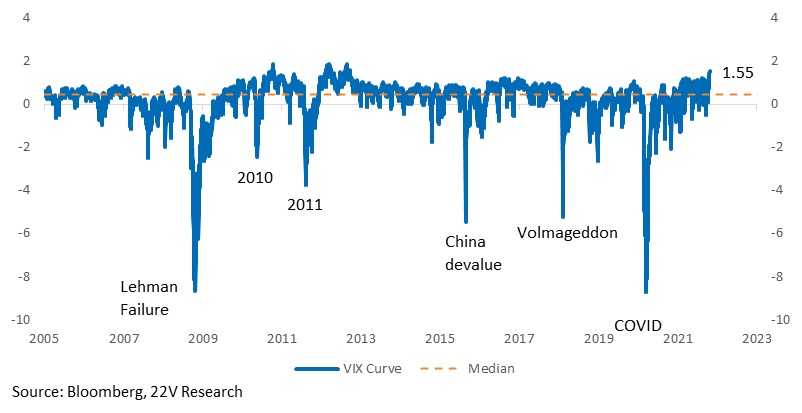
Inflation expectations have moved higher across the world along with bond yields. At the same time, credit spreads have tightened and the VIX is currently at the lowest level since before the pandemic. Biden apparently backing away from corporate tax hikes is having a positive impact on US markets, but volatility is lower across the world and the VIX curve is at one of the steepest levels on record. People will hate to hear this, but that will encourage aggressive shorting of Vol in the out months as long as the Fed is pro-growth.
The negative correlation between inflation expectations and VIX (higher inflation expectations = lower VIX) persists despite stagflation fears. Investors realize that 1) trend economic growth in the US is still very strong 2) supply outlooks are improving 3) because of 1 and 2, inflation expectations are moving up for the right reasons (improving growth prospects), 4) the Fed is still pro-growth 5) earnings/margins are strong and assuming supply chains clean up, likely to remain so. In short, the markets are well ahead of the scary headlines.
Cyclicals have led sector internals and Treasuries, the classic safety trade, have fallen, pushing the 10yr yield back towards its 2021 high. Firm economic activity and a pro-growth fed suggests continued upward pressure on yields. Currently, Value/Growth performance is in its 5th percentile relative to bond yields. With growth firm, earnings strong, seasonality a tailwind, and sentiment improving, a rebound in Value, particularly those levered to yields and the economic cycle, should be expected into year end. We are more confident in this trade post Tech earnings.
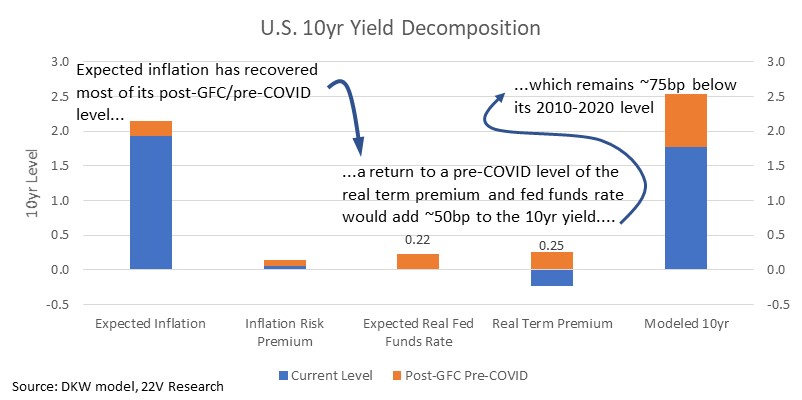
THINKING ABOUT HOW HIGH IN YIELDS: Follow a discussion at the macro dinner we hosted Wednesday night, we wanted to walk through how to think about 10yr yields. If expected inflation will be higher in ’22 than it was in ’10-’11, that alone would argue for a +2% 10yr yield. A return to a post-GFC/pre-COVID inflation risk, real fed funds and real term premium level would put that 10yr around 2.25%. Right before COVID hit, the 10yr was at 2% and expected real funds rate was 40bp higher. In other words, structural demand was keeping the real term premium negative, restraining 10yr yields. If inflation is going to be persistently higher and the zero lower bound less of a constraint, those structural forces should ease during this cycle.
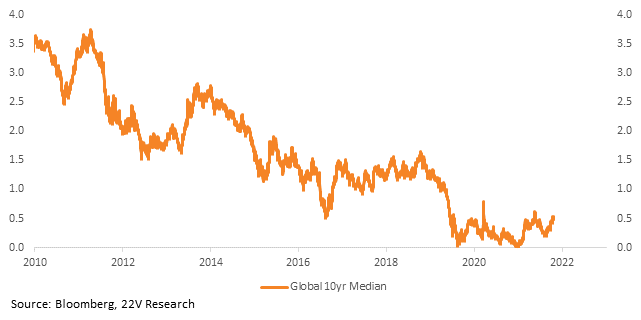
Many clients have noted the anchoring of 10yr yields as rest of world rates are pinned. Global 10yr rates have started to increase. If the inflation backdrop is persistent and monetary policy in major countries normalizes, global 10yr yields should move back to pre-pandemic levels.
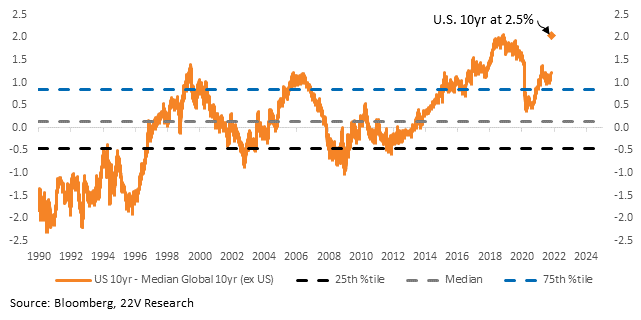
The spread between the US 10yr and RoW is already extreme. The spread will have to reach its all-time high if the 10yr goes to 2.5% and RoW doesn’t move. Granted, that’d be super weird, but 10yr yields had been outpacing RoW until recently. Bottom line, it is a fair point that rest of world yields need to increase for 10yr yields to increase.
Final point, if we end up in a 2.5%ish range on 10yr yields, big cap tech will just fine. If we go from current levels to 2.5% overnight, that will be an issue, but 2.5% on 10yr yields doesn’t make Tech less attractive on a cash return basis. 50% of Tech stocks would have a cash return yield above 10yr yields if the 10yr moved to 2.5%.