
Senator Minority Leader Mitch McConnell’s strategy is to make the so-called off-year election a national referendum on President Biden, not his predecessor. This attests both to fact that all elections are trending national in our polarized political reality and to the GOP leaders’ struggle to manage the Trump factor. The challenge for Democrats is to manage through both a sitting president’s agenda and, relatedly, his net disapproval rating. The party that triumphs over policy objectives this quarter in Congress helps its cause. However, the November 2 Virginia gubernatorial race has become the consensus factor not only for the midterms in a little over a year from now but for the direction of policy this quarter.
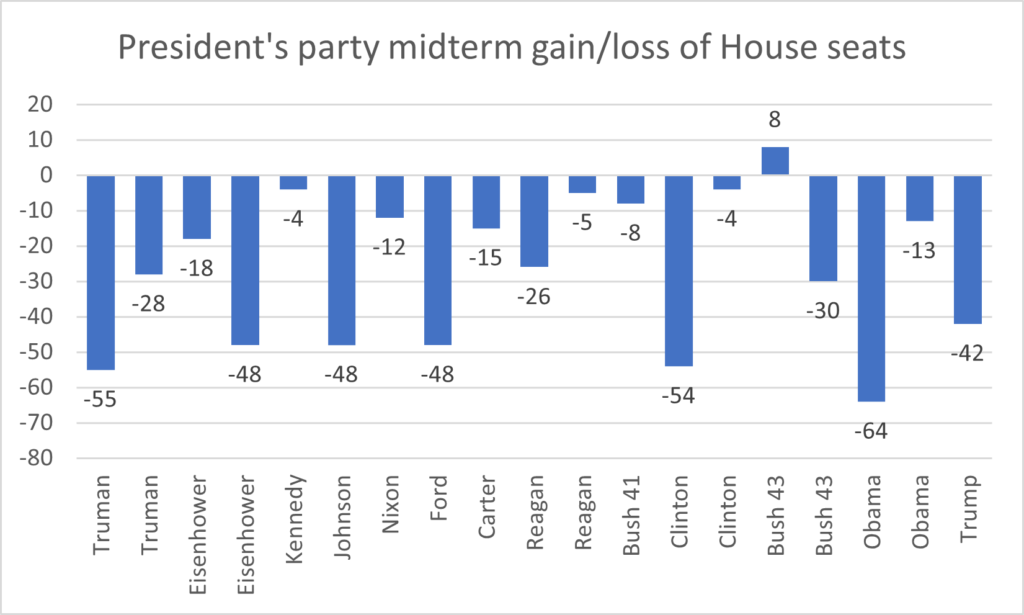
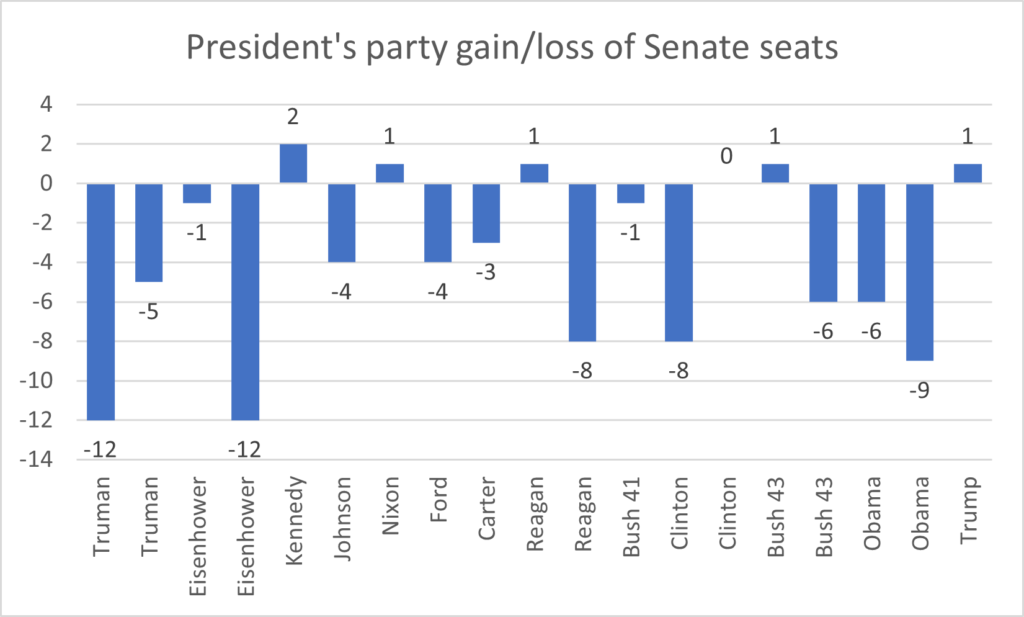
Midterm elections for first-term presidents usually don’t go well, especially in times of economic stress. From John F. Kennedy through the Barack H. Obama, six first-term presidents were in office during or immediately after a recession – three Republicans and three Democrats. Only George W. Bush added seats in the House (+8) and the Senate (+1), a feat we attribute to a very popular tax cut program enacted in June 2001 and a patriotic bounce of support after the horrors of September later that year. In the half-century period, first-termers lost an average of 1.5 Senate seats and 25.3 House seats. Biden must hope his economic program passes Congress to provide a needed electoral boost for Democrats.
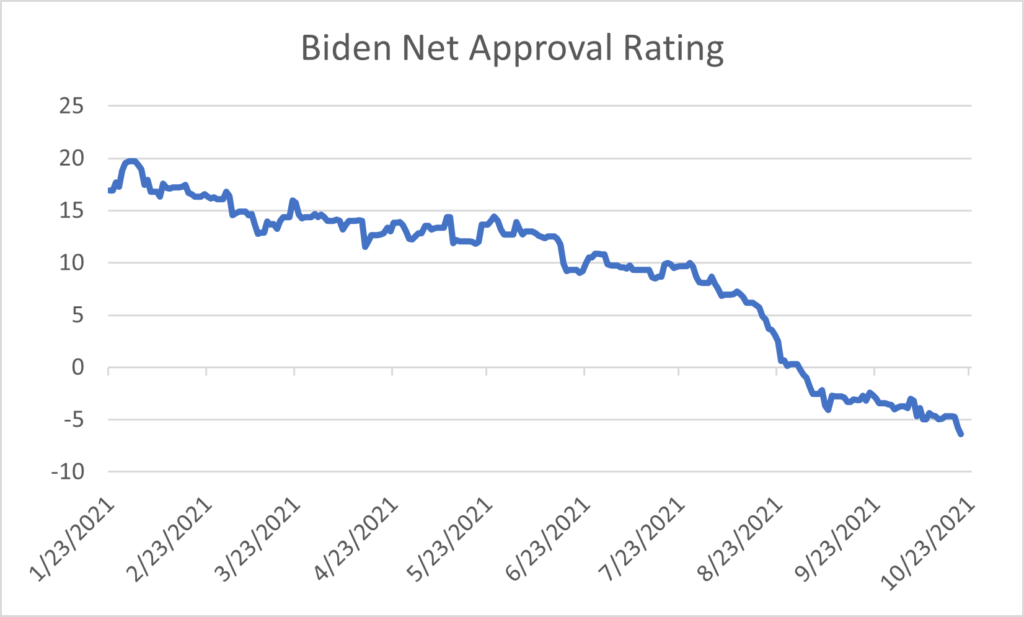
Many of us have a favorite elections analyst, ours is Nathan Gonzales and the team at Inside Elections. (Disclaimer: we have never met Nathan nor ever spoken with him or his team and pay a standard subscription fee for his useful monthly report.) He resides in the consensus by identifying inflation (a global value chain offshoot in our view), an ugly late-summer Afghanistan withdrawal, and lingering effects of the pandemic as primary culprits in President Biden’s stunningly quick and sticky fall to net disapproval. Fed Chairman Jerome Powell clearly is not the only Washington figure hoping for transitory effects. A Pew Research Center survey in September showed the president losing meaningful support from the beginning to the end of last summer among the three electoral factions most responsible for his 2020 victory and the January 2021 Georgia special election sweep: Blacks (-14), women (-14), and young Americans (-12).
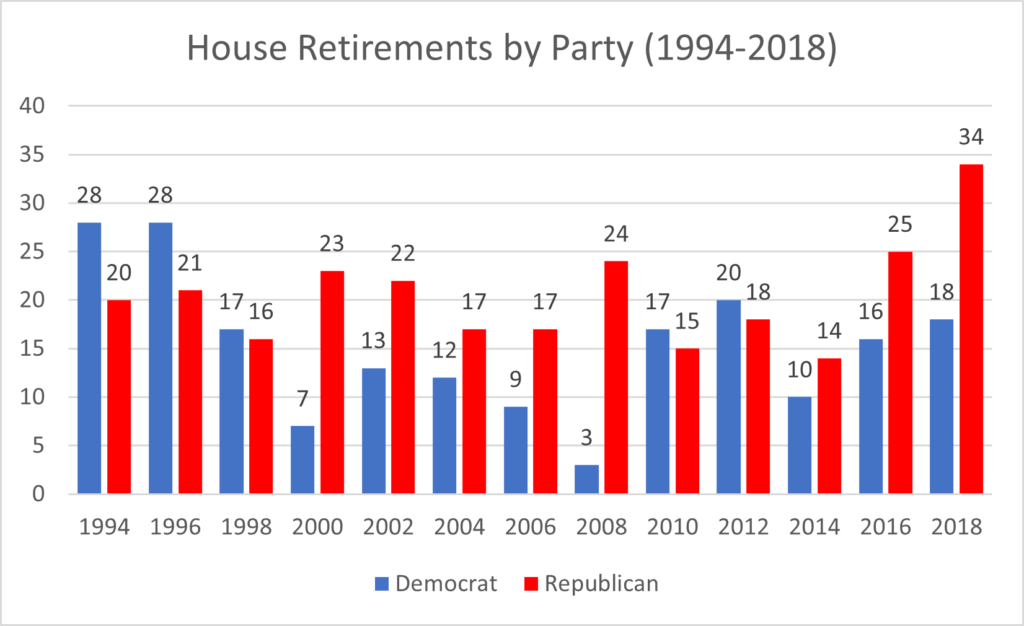
Congressional retirements can be a factor in many elections and certainly are in the 117th Congress given voting margins. Twenty-two representatives are not seeking re-election to their U.S. House seats, nine Republicans and 13 Democrats (not including those who left office early). This site lists them out by name: List of U.S. Congress incumbents who are not running for re-election in 2022 – Ballotpedia. There will surely be others in the coming weeks. Eight states are seen as Senate battlegrounds – Arizona, Florida, Georgia, Nevada, New Hampshire, North Carolina, Pennsylvania, and Wisconsin. President Biden won six and all will attract extra attention and resources as the parties fight for every seat. So far, six of the eight states will have House seats open due to retirements (Arizona. Florida, Georgia, North Carolina, Pennsylvania, and Wisconsin). Democrats are defending a razor thin (three-vote) majority advantage.
In this context, of course “pressure is mounting on Democrats.” Of more significance to markets, voters, and by extension the opposition party, will be if the pressure crushes or causes Democrats to rise, collectively. The November 2 election in “The Old Dominion” can provide an opening for congressional Democrats and the president to stick together and for his approval rating to recover. However, the pending economic agenda will be the proof of whether they do. We continue to expect Democrats will pass a $2 trillion stimulus package and $500 billion in new spending for infrastructure by yearend. Negotiations have intensified this week, a process likely to consume at least the remainder of this month. A risk to our call is that the revenue provisions raise less than $2 trillion to spend on the programs, jeopardizing reconciliation and infrastructure.

