SUMMARY: The S&P has rallied 4.9% since the end of 3Q and is less than half a percent off its all-time high. Risk appetites are reacting to a host of incremental improvements. 1) Easing of U.S. political risk (Democrats are making progress on Biden’s fiscal agenda and Kim still expects a spending bill in the $2-2.5T range), 2) China taking concrete steps to shore up growth, prevent a property price crash and increase Coal production (Coal futures were limit down in China overnight) 3) A Fed policy that is likely to remain pro-growth and 4) surprisingly strong earnings growth.
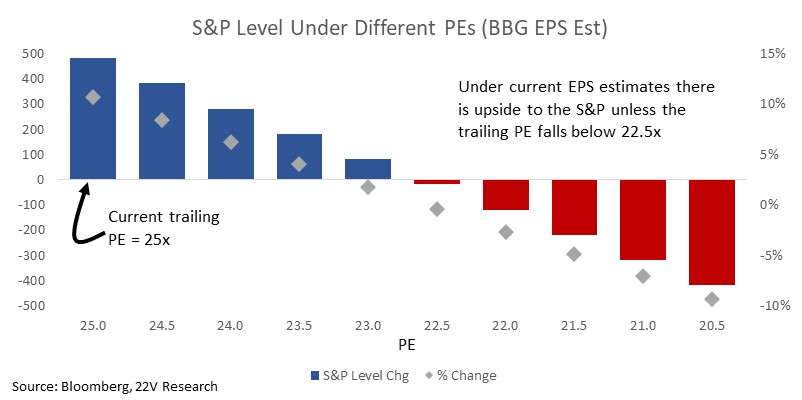
All of the above help explain why the equity risk premiums has declined recently (offsetting an increase in UST yields). Recall that the equity risk premium had moved higher in September (we think it is biased lower. Also, under current estimates, trailing earnings are expected to be up 9.8% half over half. Leave PE flat and that means the market goes up 9.8%. S&P multiples must fall over 2.5 points, under current EPS, to push the market lower

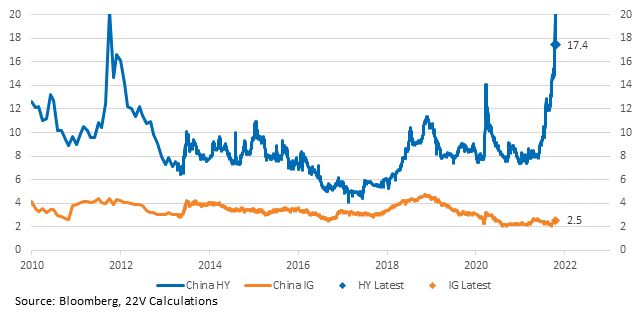
Despite weakness in China home prices, China HY spreads have tightened over the past few days; investors are buying into the government’s ability to bear the stress and willingness to provide support when needed while the global economy continues to recover. Meanwhile, the BOJ is cautious about ending its special COVID relief funds and the Fed is not going to outpace market expectations. So, global monetary policy is still accommodative and investors seem comfortable that the economic damage from the property market in China will remain contained (see strong China retail sales last Monday)
Total COVID sentiment, measured using the Amenity natural language processing tool, has moved lower helping explain the recent weakness in reopening stocks. The news has been focused on headline UK case growth, which is misleading. The concentration of the surge in case growth is in the 10-14yr old cohort. Young people are unvaccinated and attending schools without mask mandates. So, the current wave of case growth hasn’t overwhelmed vaccines and masks. The risk is around new restrictions from governments, not the increase in case growth, which some groups in the UK are calling for now. It seems unlikely that broad restrictions are coming, but investors are waiting to see if living with COVID policies will remain in place. Until that becomes clear, reopening shares will likely consolidate.
Full report below…
MARKET VIEWS: Overnight, the PBOC released a paper tempering rate cut expectations, but the PBOC also stepped up liquidity injection into month end. China HY spreads have tightened over the past few days despite a myriad of issues (a power crunch, property market tightening, supply chain stress, etc.). Investors are buying into the government’s ability to bear the stress and willingness to provide support when needed while the global economy continues to recover. Meanwhile, the BOJ is cautious about ending its special COVID relief funds and the Fed is not going to outpace market expectations. So, global monetary policy is still accommodative.
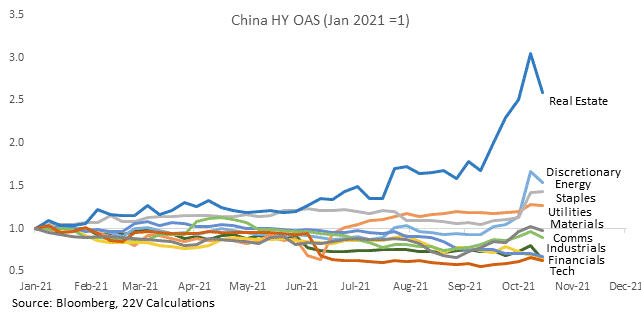
The dramatic increase in China high yield credit spreads was mostly contained to Real Estate (about 2/3rds of the index). Recently, Discretionary, Energy, and Staples OAS had begun to widen out, making us a little uneasy about the possibility of contagion. But OAS have since consolidated across sectors.
U.S. Treasury yields have stalled recently, but are trending higher in October. All else equal, higher bond yields translate into lower equity PEs, but the S&P has rallied 4.9% since the end of 3Q and is less than half a percent off its all-time high. Risk appetites are reacting to a host of incremental improvements. 1) Easing of U.S. political risk (Democrats are making progress on Biden’s fiscal agenda and Kim still expects a spending bill in the $2-2.5T range), 2) China taking concrete steps to shore up growth, prevent a property price crash and increase Coal production (Coal futures were limit down in China overnight) 3) A Fed policy that is likely to remain pro-growth and 4) surprisingly strong earnings growth.
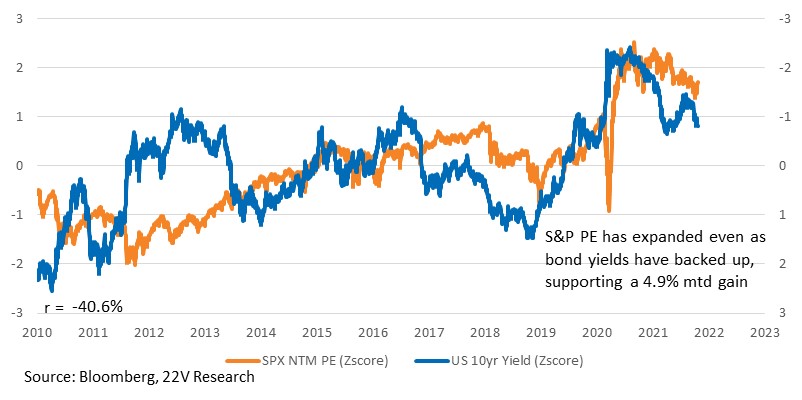
All of the above help explain why the equity risk premiums has declined recently. Recall that the equity risk premium had moved higher in September (we think it is biased lower (LINK). Additionally, under current estimates, trailing earnings are expected to be up 9.8% half over half. Leave PE flat and that means the market goes up 9.8%. S&P multiples must fall over 2.5 points, under current EPS, to push the market lower
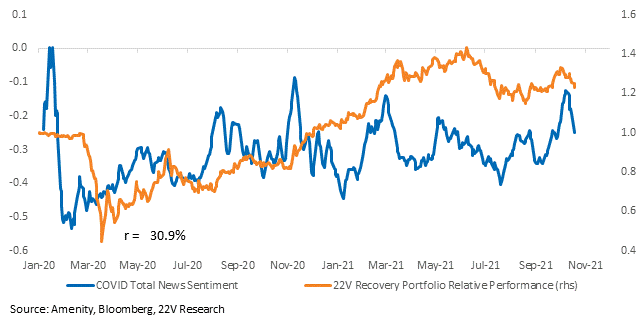
MODERATE COVID RISKS: Through Late September, easing case growth and reopening of supply chain countries had helps COVID sentiment rebound from its Delta wave low. Recently, Delta Plus has been causing increased case growth in the U.K. and worries that another global wave of cases will weigh on a global economy already suffering from supply chain-induced inflationary pressures. Total COVID sentiment, measured using the Amenity natural language processing tool, has moved lower, helping explain the recent weakness in reopening stocks.
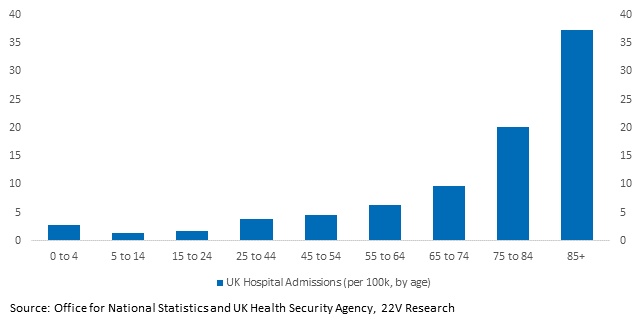
Delta Plus has caused increased overall case growth in the U.K. but the headline number is misleading. Currently, the concentration of the surge in case growth is in the 10-14yr old cohort. Young people are unvaccinated and attending schools without mask mandates. So, the current wave of case growth hasn’t overwhelmed vaccines and masks. Also, COVID is much less dangerous for younger cohorts. And, as we mentioned yesterday, German researchers found delta plus doesn’t appear to be deadlier than delta. So, there’s unlikely to be significant changes in behavior. The risk is spreading the sub-variant to other, more at-risk cohorts. But those groups are vaccinated this time around.
Despite the general rise in equities and the continued outperformance of Cyclicals (market internals still not signaling stag/slowflation risk), our Value and our Recovery Portfolio have significantly underperformed this month. If COVID headwinds accelerate, Reopening will continue to struggle. With growth firm and earnings season dashing margin pressure fears, we continue to like the Reopening basket as a group.
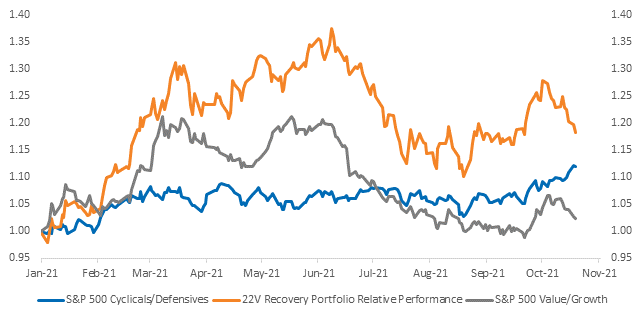
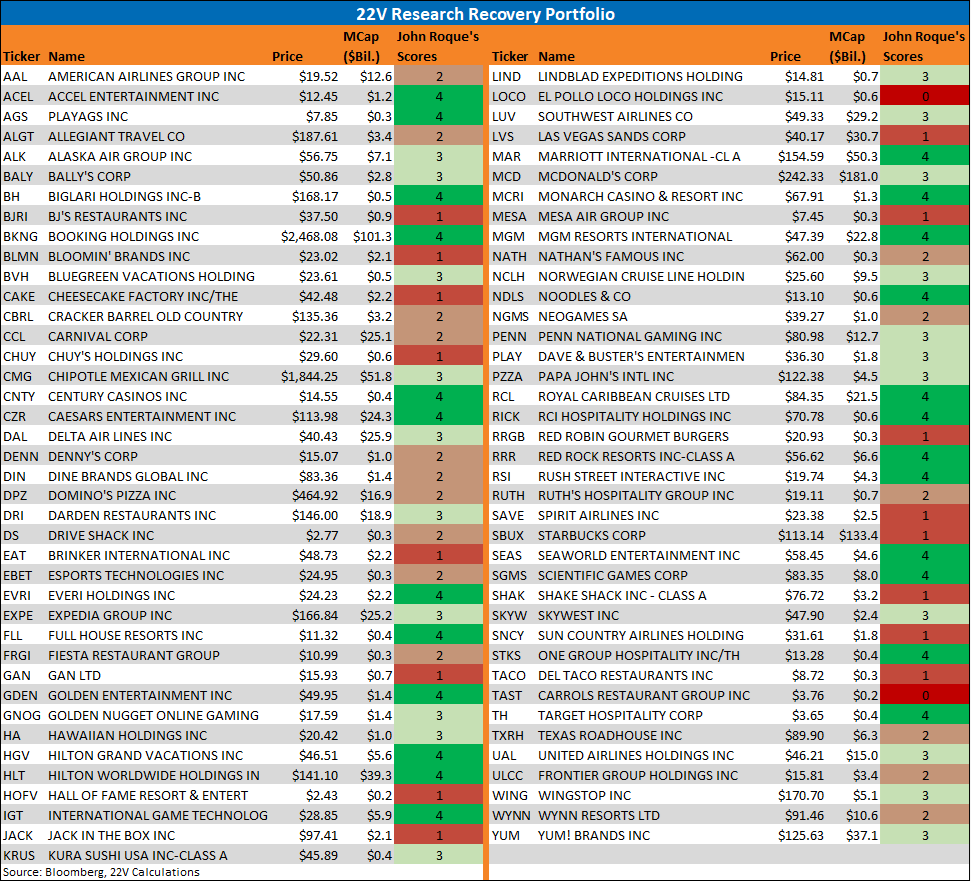
Short term, headline risk is likely to continue weighing on Reopening names, but as we move through earnings season and into the end of the year, headwinds to the group should ease. Below we list the complete constituents of the Recovery Portfolio along with their technical scores from John Roque, 22V’s new head of Technical strategy. John’s “system” uses a scoring range of 0 – 4:
0’s & 1’s = poor, weak, bearish, 2’s = neutral, 3’s & 4’s = good, strong, bullish.