
In the past week, Washington has shown little appetite for tangible risk even while some bask in the uncertainty of headline risk. Fiscal policy risk remains but it is healthy to acknowledge that shying away from worst case outcomes works for most elected officials. Even short-term rolling extensions boost scheduled anxiety much more than policy risk. We believe this trend will continue at least for the remainder of this quarter.
Senator Mark Warner (D-VA) reportedly summed the week best: “This whole process is stupidity on steroids.” We also agree with Jamie Dimon, the most recent national figure to urge that a so-called advanced economy shouldn’t have a debt ceiling. The political value of the artifice to some suggests no change soon, but the past week provides more fodder to Dimon’s lament. The few times over the past decade that Congress was brave enough to increase Treasury’s borrowing authority required a heavy lift. That no party wants responsibility for the next one is rational.
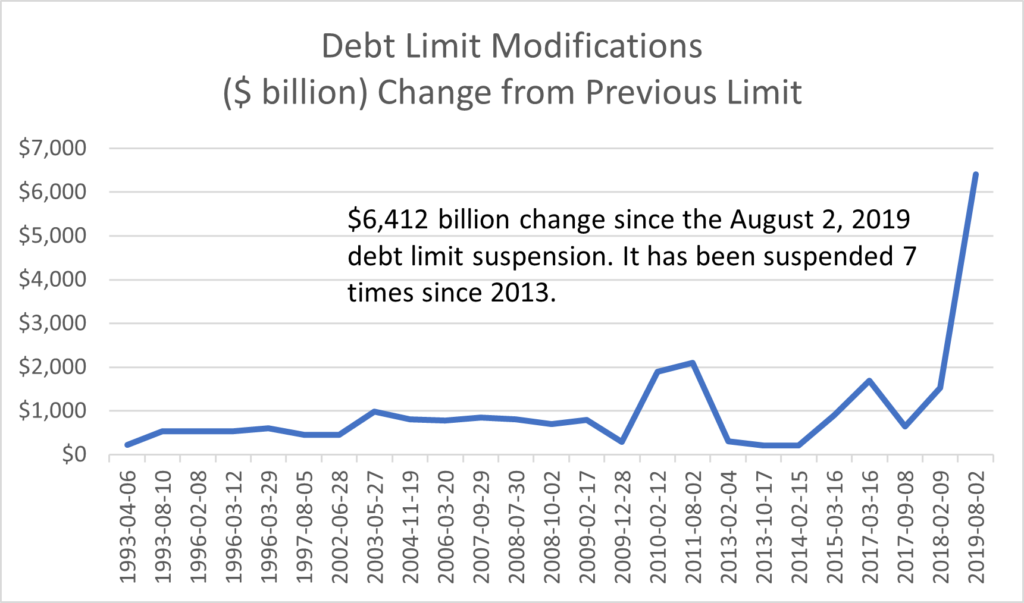
The Senate last night passed a debt limit increase of $480 billion to give Treasury enough borrowing room until the first week of December. Once meeting paused investment obligations in various federal retirement funds, Treasury will likely have cash management capability through the yearend holidays. The bill now heads to the House for a vote and expected passage likely next week. Linking debt ceiling and continuing resolution short-term expirations (December 3) is well-trodden DC custom that all but guarantees Congress will be in session beyond mid-December.
In the interim, Republicans will hope Democrats splinter enough to reduce odds of President Biden’s economic plan becoming law. Democrats will struggle through making tough decisions on whether to haircut all core programs in his plan or drop a few to stay within the confines created by the tax-writing committees. In the end, both parties are managing expectations of what could be the largest fiscal realignment since George W. Bush’s first-year agenda.
It’s a fight worth having. We continue to believe the most likely outcome this quarter is for Congress to enact around $2 trillion of stimulus and $500 billion of new infrastructure spending that will spend out over multiple years. No doubt coming to agreement on the details of reconciliation will vex Democrats, but it remains the case that all stakeholders have plenty of reason to talk through disagreements to achieve common objectives. Other than spending programs, Bidenomics seeks to make US tax burdens more evenly shouldered by US multinationals by reducing tax loopholes. As Democrats work through reconciliation decisions, the tax side of the ledger should help bring closure to the conversation.
In related news, Ireland’s acceptance of the OECD’s 15% minimum corporate tax marks the nearing of an end to the organization’s three-decade process to rationalize international business taxes. This deal came together when President Biden enabled Treasury Secretary Janet Yellen to negotiate an outcome favoring the G10 which effectively boxed in most of the G50. The pending international business tax changes contained in reconciliation begin the process of US compliance with the deal Yellen and Biden endorsed. We expect more to come in the president’s FY23 budget.
Our 4Q21 fiscal outlook has firmed up as the turn of each calendar day brings more generally reinforcing developments. The dominant risks to this noisy but thus far benign Washington work profile are political and not substantive, as evidenced by politicians’ statements to date. Opponents point to the overall cost and project consequential horrors without providing much convincing theory. Similarly, some proponents object that compromising to a lower number is surrender, again without much proof. As usual, the truth lies somewhere in between.

