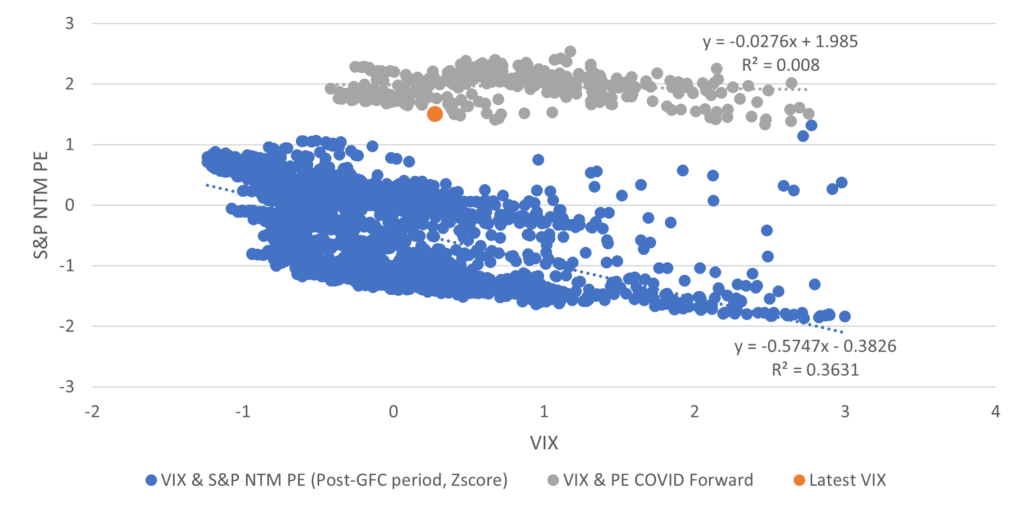
Historically, the level of implied volatility is negatively correlated with the S&P PE. The higher the VIX the lower the S&P PE and vice versa. In the COVID period, that relationship collapsed as PEs remained exceptionally high relative to also high implied volatility. Those high PEs were in part a result of earnings that were far too low, as evidenced by the incredible level of intra-quarter EPS beats from 3Q20 forward. Today though, earnings growth is slowing and revisions are not as outlandish as they were. As PEs come down, the relationship between changes in volatility and valuations should strengthen.
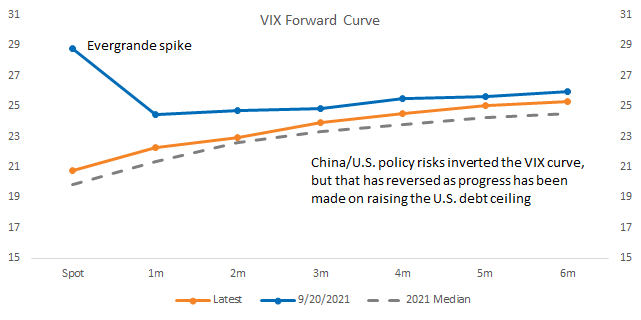
Lower COVID risk, a U.S. debt ceiling deal, and reduced concerns about a “Lehman moment” in China have helped drive near-term implied volatility lower. The VIX curve inverted on the Evergrande default news in mid-September and spot VIX remained elevated through yesterday afternoon. Currently, the VIX curve has fallen back to its 2021 median level. In other words, investors are now discounting a level of volatility similar to what has prevailed for most of the year.
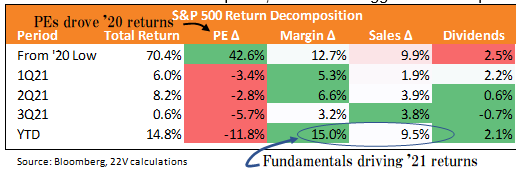
Normalization of valuations has been taking place all year; the S&P PE is down 2 points. Importantly, the S&P is still up 15% as improving fundamentals have more than made up for the decline in the PE. As we move further away from pandemic era markets, particularly as the path off the zero lower bound becomes clear, fundamentals and non-COVID shocks will matter more for equities, which also suggest a slower pace of headline returns.
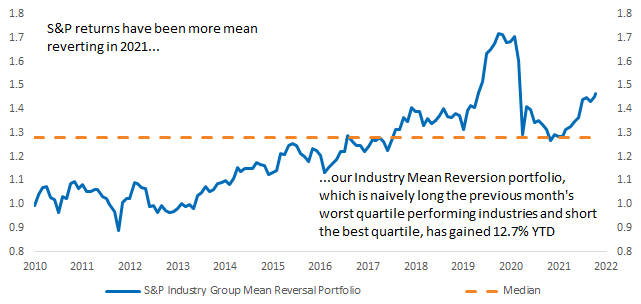
2021 has already seen the return of lower correlation, mean reverting, higher dispersion markets. Our mean reversal portfolio, which goes long the worst performing quartile of S&P industries from the previous month and short the best performing quartile, has gained 12.7% YTD. From 2012 forward, outside of the move off the market low following the pandemic, positioning for persistent mean reversion has been consistently profitable. A lower PE market with increased volatility influence should see this trend continue.
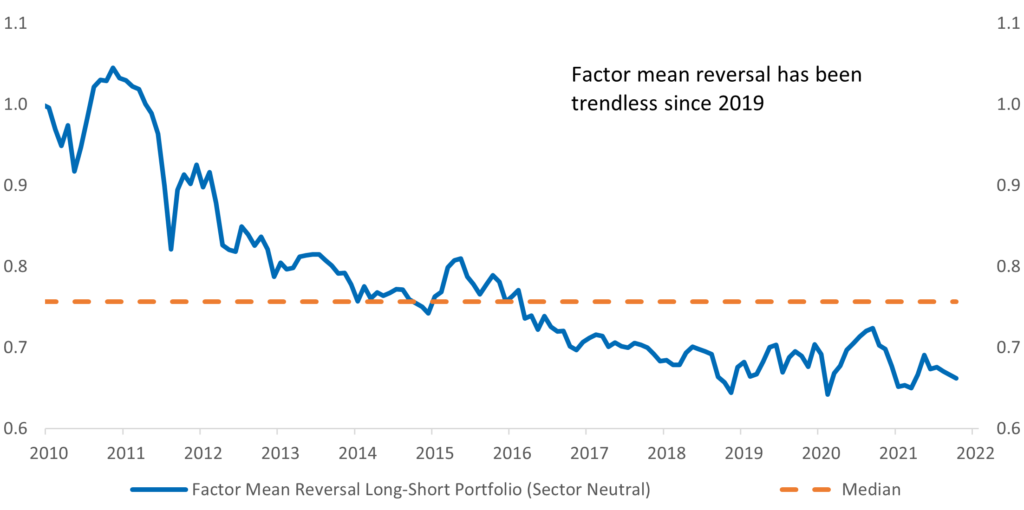
Interestingly, there has been no such mean reversal trend in factors. Investors have been rotating through industries as micro trends emerge, but factor trends have been more durable. Outside of a modest bounce and decline during the pandemic, when correlations reached their highest point in the history of our data and then collapsed, positioning for factor reversals has been unprofitable.