
Producers of the debt limit drama series promised a new episode at the Senate Banking and Urban Affairs Committee yesterday. While some of the script lines changed from previous episodes, viewers weren’t exposed to anything original. Chairman Sherrod Brown (D-OH) did provide a lighthearted commercial when at the end of Senator John N. Kennedy’s (R-LA) five minutes of necessary political theater including an invitation to discuss all manners fiscal with Treasury Secretary Janet Yellen in a less formal setting, Brown asked Kennedy if he’d be willing to pay his share of the cocktail tab. {Cut to the audience laugh track}
The day’s programming began with the expected update from the director (Yellen) which got to the punch line in paragraph three: “We now estimate that Treasury is likely to exhaust its extraordinary measures if Congress has not acted to raise or suspend the debt limit by October 18.” This puts us in third-or-second-to-final scene of Act One of a two-act drama. We’ll lay out the end stages of act one in this note, saving for later curtain-closing prospects for Act Two: “The Day the US Defaulted”. Given supply chain problems, maybe now is a good time to stock up on popcorn.
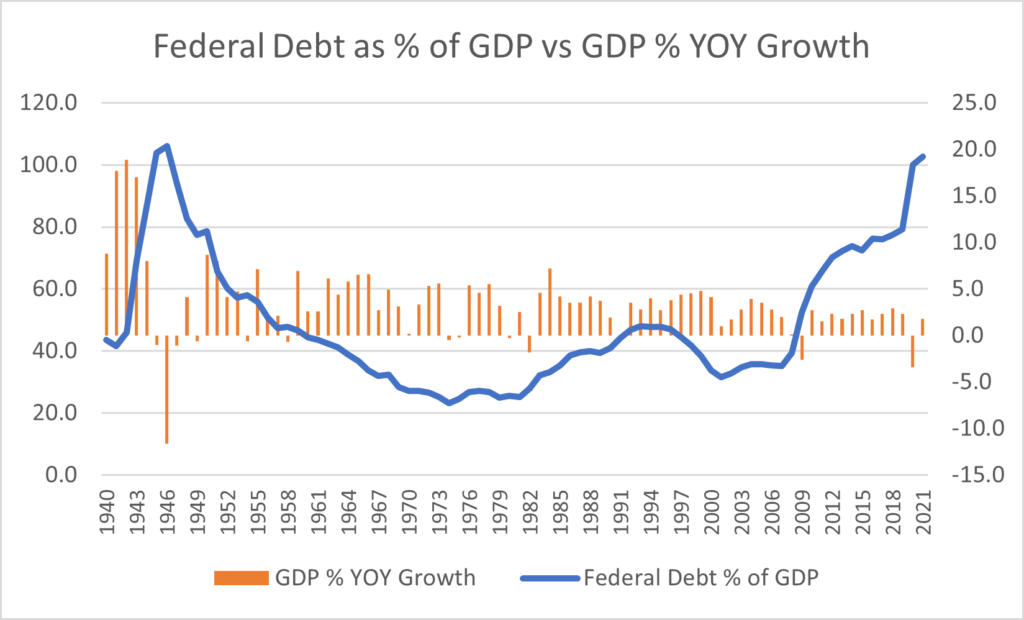
Our chart today underscores a point that the debt ceiling matters in real life only when politicians choose theatrics over work. The statutory limit doesn’t constrain debt, obviously, it hasn’t been a factor in cutting spending or raising taxes – ever (including 2011), and it doesn’t in isolation even provide factors for analyzing good, bad, or indifferent fiscal policy. Debt Subject to Limit metrics do not spur or hinder growth. It is an accounting artifice of the most inconsequential degree. {Dim the House (and Senate) lights}
Nonetheless, asset markets, viewing from home, did not like the spectacle and expressed such in a New York minute just before the open of US markets. This section of the audience is always distracted by any number of other shows along the spectrum of risk in the daily lineup produced around the world. Markets, like other people busy with real work, prefer DC theatrics in the uninteresting, quieter form. Nothing breaks disquiet like the potential for dumb, artificial fiscal policy.
Scanning our script beginning from the final page shows Act One ending on Monday the 18th of October this year. Assuming this date holds, the final scene of this Act likely involves the leading actors scurrying quickly to avoid closure of the theater. Success at this point occurs under imaginable but unpredictable duress as global soft and hard asset markets spin nearly out of control. The scene before this one runs October 12-15 when some theatergoers will be returning to their seats from the Columbus Day intermission. Other sideshows usually foremost in ticketholders’ minds will recede to a far, dark background.
Next week is the third-to-last scene of Act One. That curtain rises on Monday when the producers (Congress) have individual actors practice lines and generally mill about the stage pretending that other assignments (funding government, helping people without dwellings due to natural disaster and a rapidly changing climate, and deciding whether stimulus might help growth) matter less than their tired lines about public debt. Here the actors are tested to stay in character and talk as though they care about debt rather than talking about what to do about it going forward and how we got to this point in the script – again. Some attendees notice both the costumes and lines really could use an update.
It’s unlikely we’ll have to write Act Two

