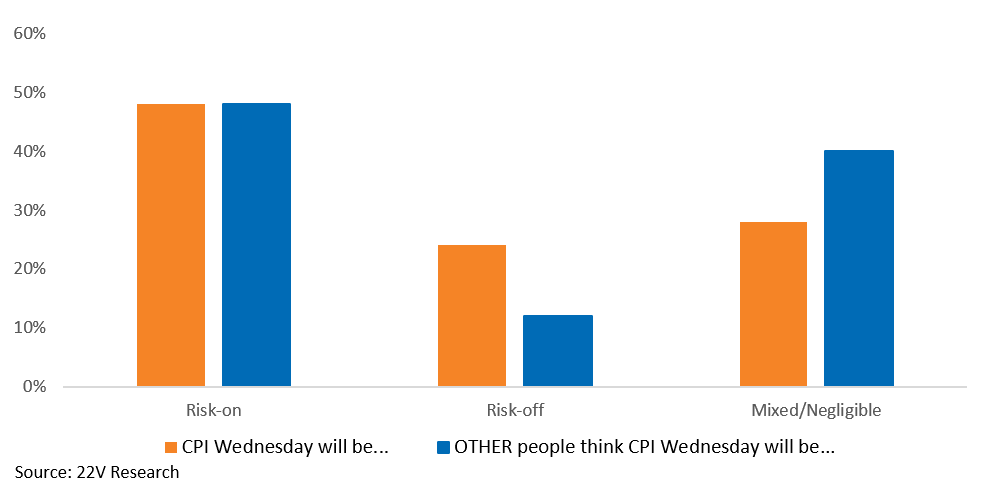
DAILY STRATEGY: Our pre-CPI survey (HERE) shows the majority expects an in-line print and a risk-on reaction, with the 0.20% / 0.30% thresholds serving as the clear line between a risk-on and risk-off reaction. Even if the Core reading comes in at 0.3% MoM, it might not be hawkish. A hawkish or dovish interpretation depends on what the underlying low-level detail imply for the best guess of the Core PCE Price Index. The closest way to get toward what CPI will mean for risk assets, on the data release, is how Core CPI ex housing comes in. Otherwise known as Supercore. Last month showed a decent drop 3.67% to 3.17% in Supercore. If Supercore is 3.17% again, the immediate market reaction will be risk-on.
FYI – if Supercore jumps BUT the headline Core CPI reading is 0.2% MoM, it would not be dovish. It would mean that housing drove the dovishness. Housing has a much different weight in Core PCE than Core CPI.
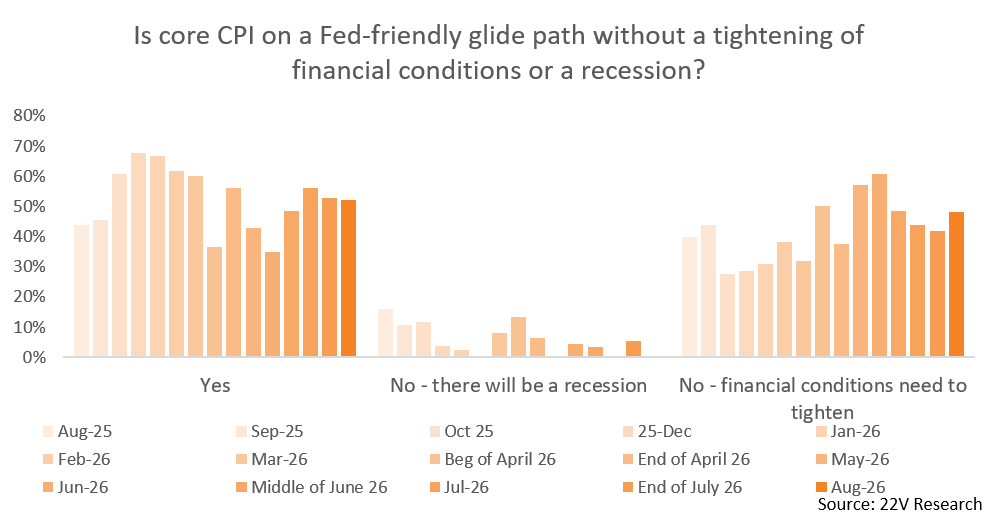
An interesting shift in the pre-CPI survey data is that 48% of investors now believe financial conditions need to tighten to get inflation on a Fed-friendly path, up from recent readings. Yet some of those investors think the CPI reading will be on the benign side today. This could suggest that investors expect 10yr yields to remain around current levels or higher.
Stepping back – The medium-term case for additional tightening is less about any individual inflation print and more about the accumulating picture: unemployment running below the Fed’s own June forecasts, private final domestic demand still very strong, and rates that don’t yet appear to be doing much visible restraint in aggregate. That combination keeps the tolerance for above-target inflation low, and makes the surprisingly popular answer in our survey (risk-off, more below) worth taking seriously even if the base case remains constructive.
Charts…
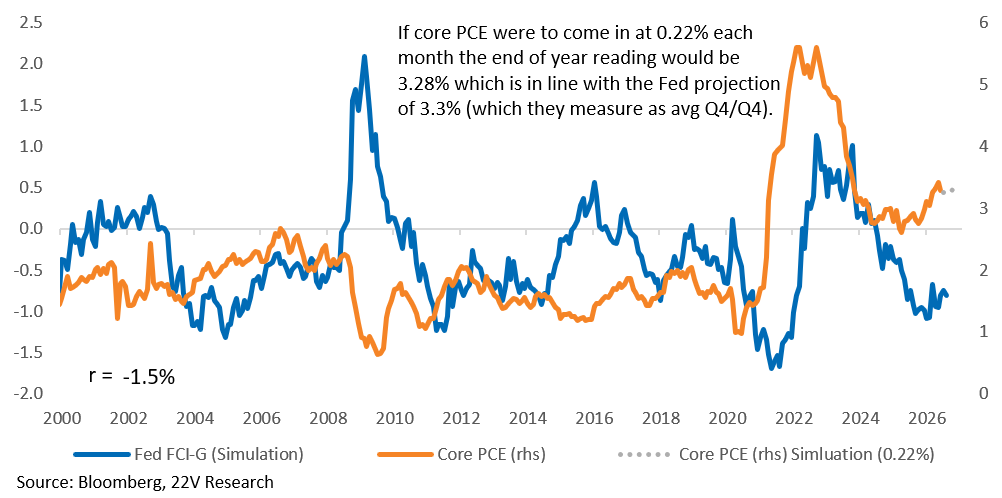
June median PCE forecast now implies roughly 0.22% MoM for the remainder of the year to reach the Fed’s 3.3% target
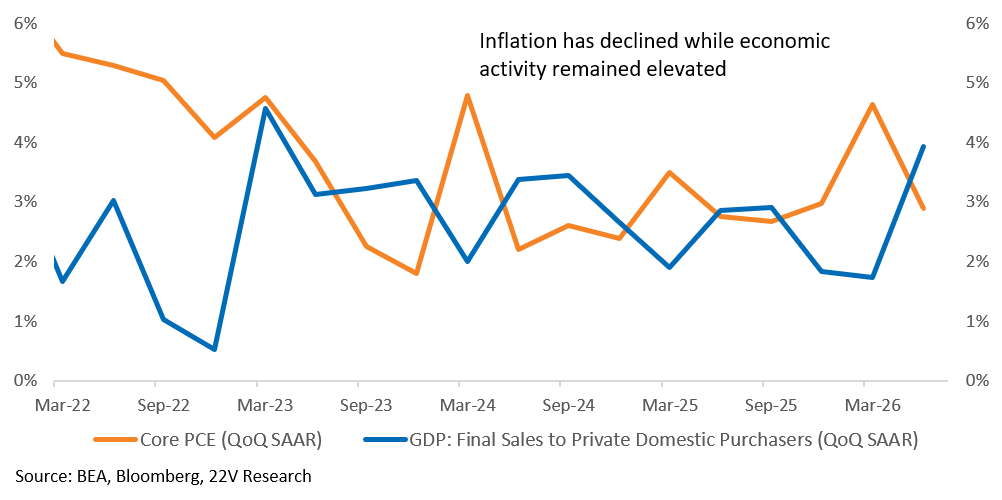
Private final domestic demand has remained strong while inflation has declined.
The medium-term case for hikes by early next year is much more about building evidence that the current level of rates is not all that restrictive. With growth holding up and unemployment running below both the Fed’s June projections and most estimates of NAIRU, the labor market hasn’t loosened enough to meaningfully compress wage growth, keeping inflation just a bit too high for comfort at this point in the cycle.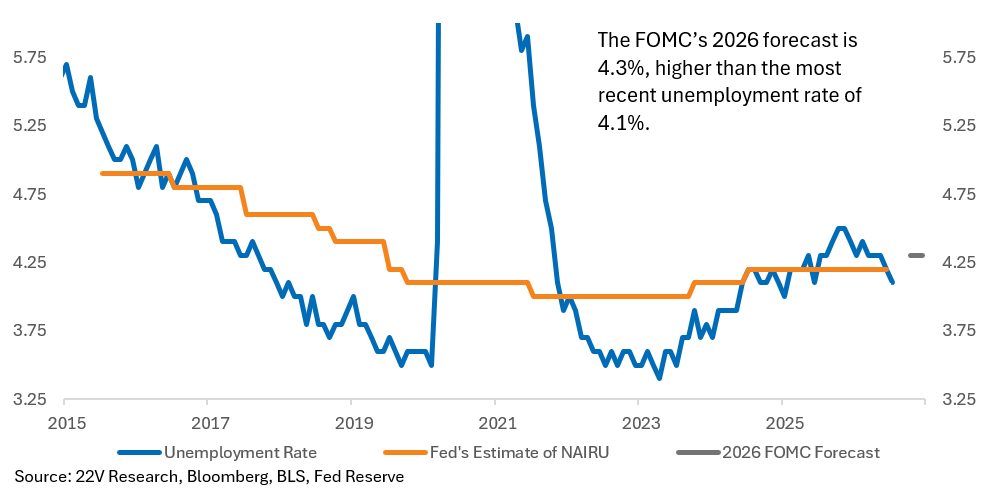
48% of investors now believe financial conditions need to tighten to get inflation on a Fed-friendly path, up from recent readings.
48% of investors believe that the market reaction to CPI will be risk-on. Risk-off is the surprisingly popular answer. We ask investors what they suspect other people think because academic research has indicated there is a signal in the ‘surprisingly popular’ answer – the answer where actual belief exceeds the predicted popularity.